
Tallahassee Bone Grafting: Your Path to a Healthier Foundation
Understanding Bone Grafting: Your Foundation for Dental Health
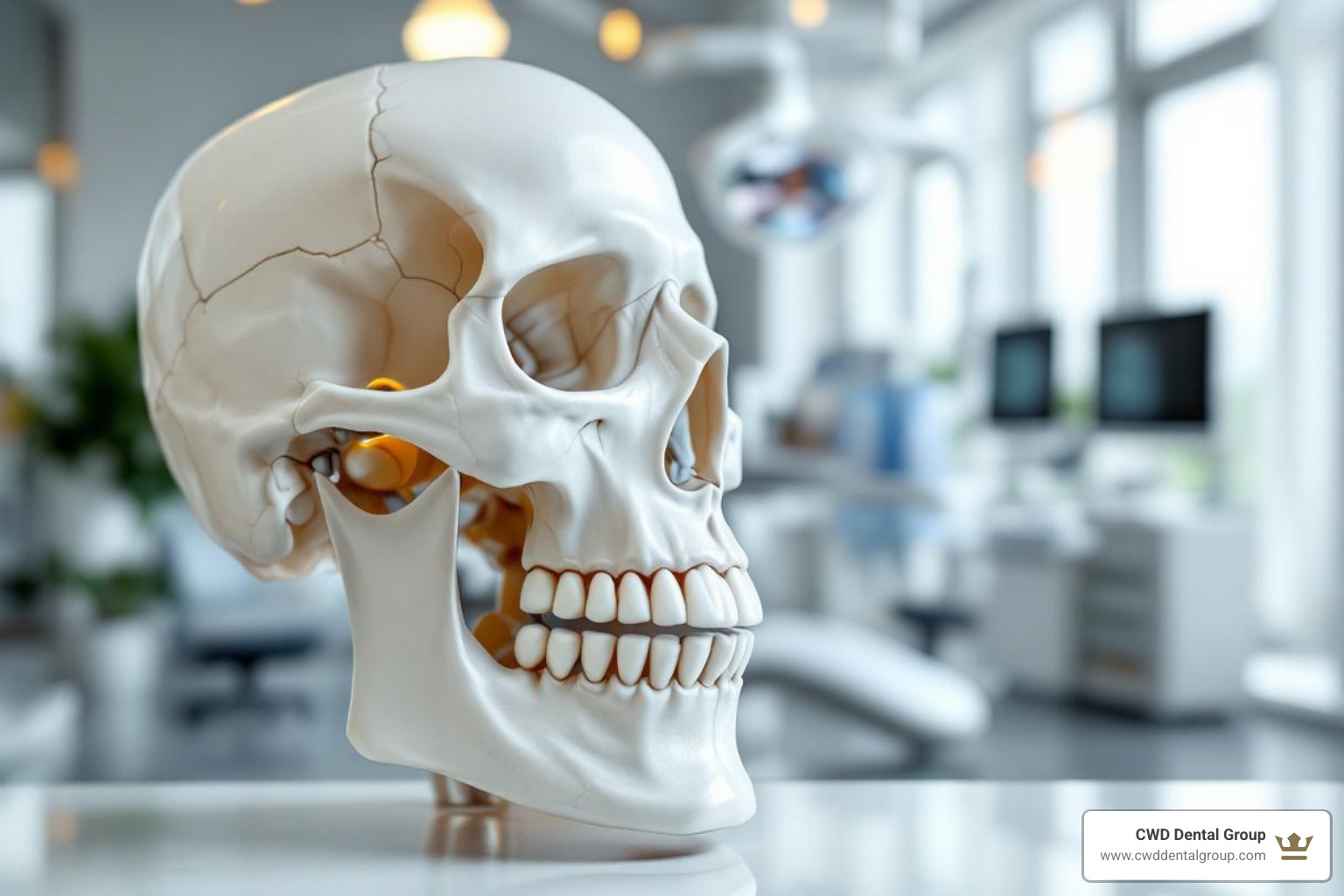
Bone grafting Tallahassee is a surgical procedure that rebuilds and strengthens your jawbone. By adding bone material to areas where it has been lost, it creates a stable foundation for dental implants, prevents further bone loss, and preserves your facial structure. It's a common and necessary step for many patients looking to restore their oral health.
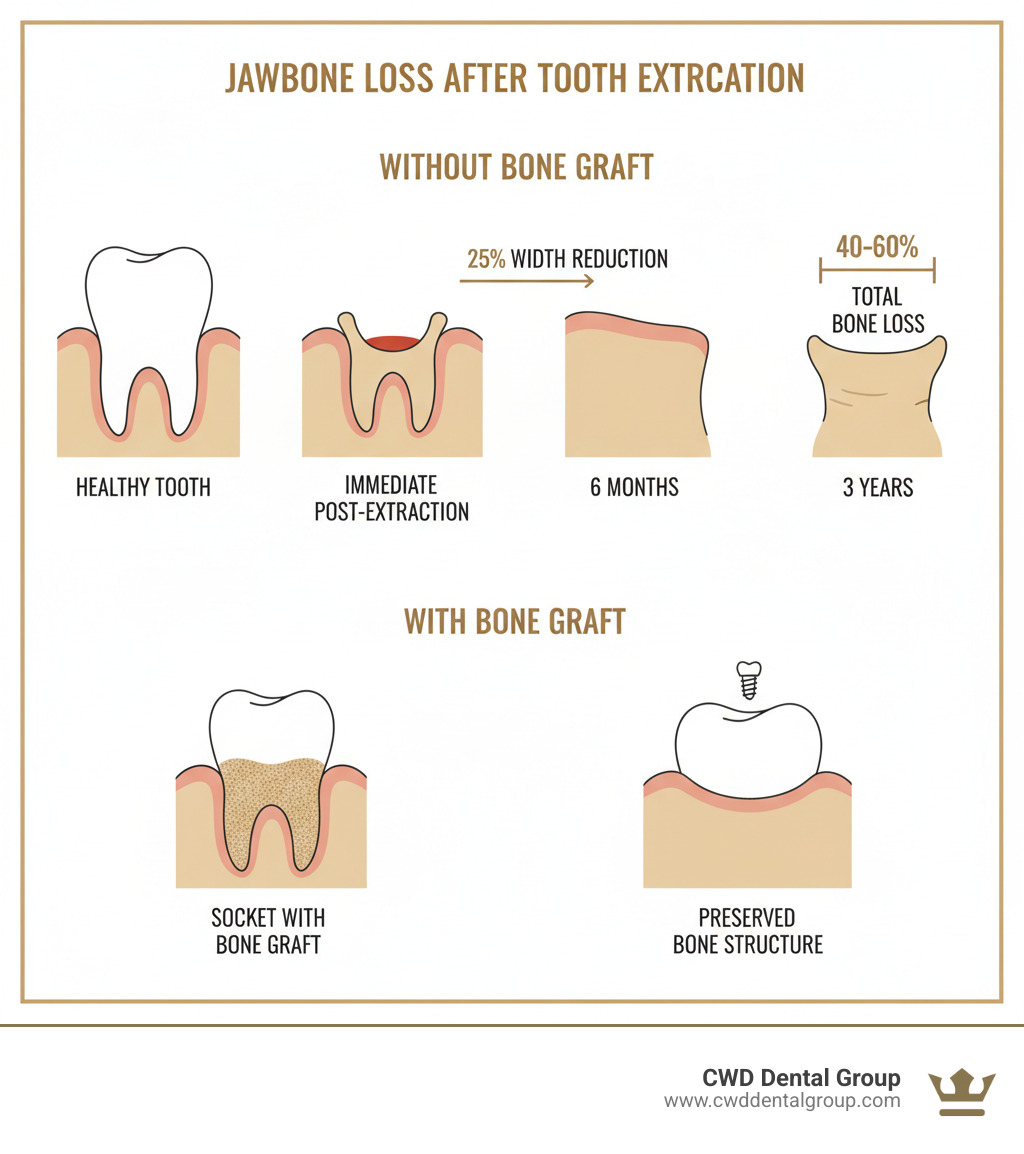
You might wonder if this extra step is truly necessary after a tooth extraction. The answer is a resounding yes. Bone loss begins almost immediately after a tooth is lost. Studies show that patients can lose 40-60% of the bone surrounding an extraction site within three years. Bone width can shrink by as much as 25% in the first year alone.
This happens because a tooth's root stimulates the jawbone through biting and chewing. Without that stimulation, the bone begins to atrophy and reabsorb—a process called resorption. This can lead to a sunken facial appearance, shifting of adjacent teeth, and a weakened jaw that complicates future dental work.
Bone grafting restores what's been lost. It replaces missing bone and creates a scaffold that encourages your body to grow new, healthy bone. Whether you're planning for dental implants, recovering from periodontal disease, or want to maintain your facial structure, bone grafting provides the solid foundation your smile needs.
My name is Kayle Vernon, and with a decade of experience in dental marketing, I've helped many patients in Tallahassee understand procedures like bone grafting. My goal is to explain everything you need to know about Bone grafting Tallahassee in simple terms, so you can make an informed decision with confidence.
Why is a Dental Bone Graft Necessary?
Your jawbone is the foundation that supports your teeth, maintains your facial shape, and allows you to chew and speak. When that foundation weakens, Bone grafting Tallahassee becomes essential to rebuild it.
The primary reason for a bone graft is to stop jawbone resorption, or the shrinking of the jawbone after a tooth is lost. Without the stimulation from a tooth root, the body begins to reabsorb the bone, believing it's no longer needed. This process is rapid, with bone width shrinking by 25% in the first year and up to 40-60% over three years.
The consequences include shifting of adjacent teeth, bite problems, and a sunken facial appearance. Periodontal disease is another major cause of bone loss, as it destroys the bone and tissue supporting your teeth. A bone graft can replace what's been lost and create an environment for healthy tissue to regenerate. Bone grafting also helps with facial structure preservation, preventing the changes that come with bone loss. To learn more about how we support your overall oral health, visit our More info about our Services page.
When to Consider a Graft After Tooth Extraction
The ideal time for a bone graft is immediately after a tooth extraction. This procedure, called socket preservation, involves placing graft material directly into the empty socket. It's far easier to prevent bone shrinkage than to rebuild it later.
Socket preservation maintains the jawbone's width and height, providing a scaffold for new bone growth. This is crucial if you're planning for future implants, as it ensures a smoother, more predictable process. Even if you're undecided about implants, preserving the bone helps support adjacent teeth and maintain proper bite alignment. While an immediate graft is preferred, a delayed graft is still highly effective at rebuilding lost bone.
Preparing for Dental Implants
For many patients, bone grafting is the crucial first step toward getting dental implants. An implant needs a solid foundation with sufficient bone density and volume to be successful long-term. Without enough bone, an implant cannot integrate properly.
Bone grafting creates a solid foundation by replacing missing bone and encouraging new growth. This process, called osseointegration, is what gives implants their stability. As the American Academy of Periodontology notes, Sufficient bone is essential for a dental implant. By rebuilding the jaw structure, a bone graft dramatically increases the implant success rate and helps restore function, allowing you to eat, speak, and smile with confidence.
Types of Bone Grafts and Materials
For Bone grafting Tallahassee, several excellent material options are available, each chosen based on your specific needs. These biocompatible materials act as a scaffold, giving your body the framework it needs to grow new, healthy bone. As the Cleveland Clinic explains, A dental bone graft is a type of surgery that replaces missing bone. The choice of material depends on the amount of bone needed, the graft's location, and your overall health.
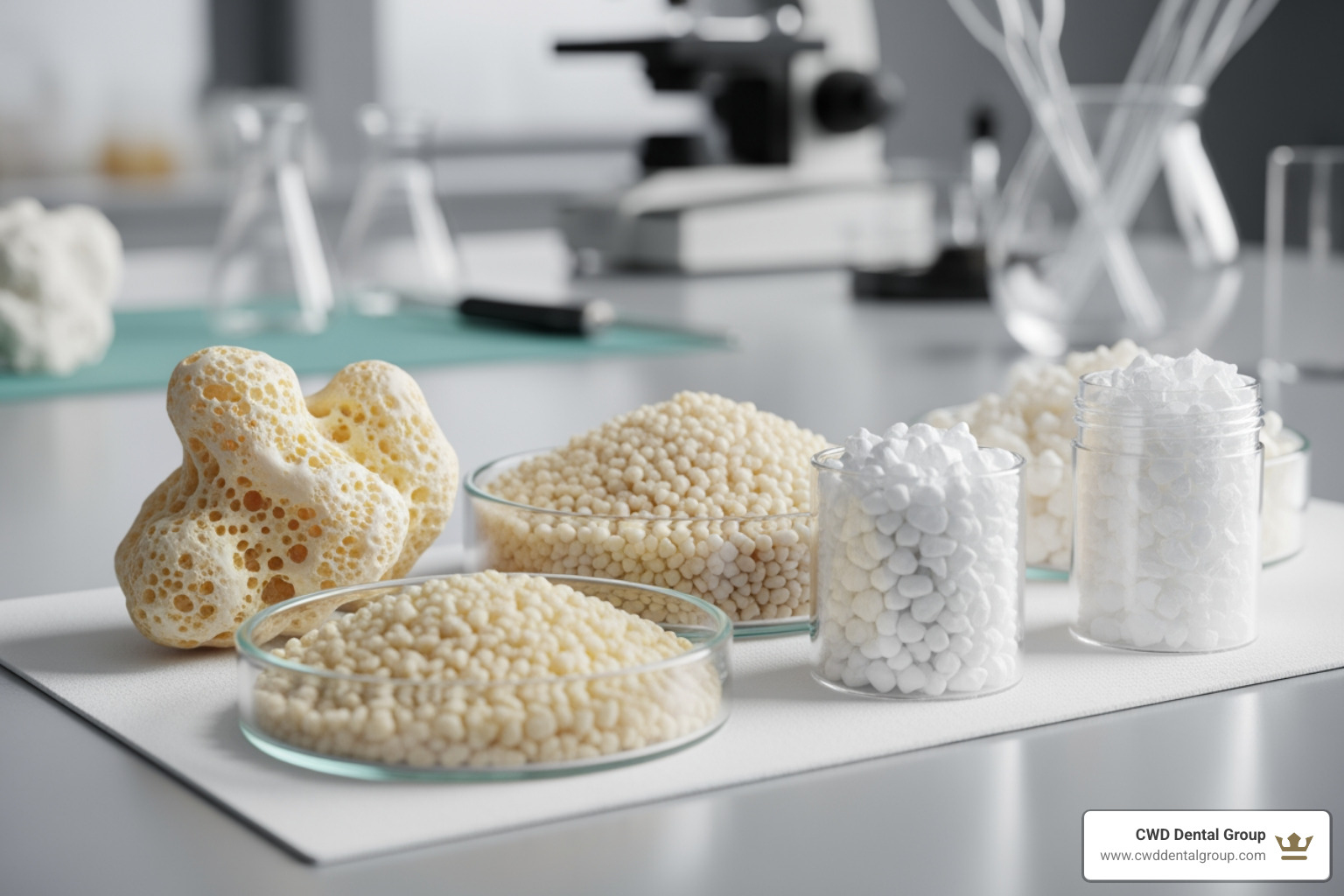
Comparing bone graft types
| Type of Graft | Source | Benefits | Considerations |
|---|---|---|---|
| Autograft | Patient's own body (e.g., jaw, chin, hip, skull) | Contains living bone cells and growth factors; most predictable results; excellent compatibility | Requires a second surgical site for harvesting; may not be an option for patients in poor health; limited availability |
| Allograft | Human donor (cadaver bone) | No second surgical site needed; readily available; processed for safety | Does not contain living cells; acts as a scaffold; regeneration may take longer and be less predictable than autografts |
| Xenograft | Animal source (typically cow or pig bone) | No second surgical site needed; widely available; processed for safety | Does not contain living cells; acts as a scaffold; regeneration may take longer and be less predictable than autografts; processed at high temperatures to avoid contamination |
| Alloplasts | Synthetic materials (e.g., calcium phosphate, calcium sulfate) | No second surgical site needed; no donor tissue required; biocompatible | Does not contain living cells; acts as a scaffold; may have slower or less complete integration compared to natural bone grafts |
- Autografts use your own bone, often considered the gold standard for its compatibility and living cells, but require a second surgical site.
- Allografts use processed and sterilized bone from a human donor, eliminating the need for a second surgical site.
- Xenografts are sourced from animals (like cows) and are highly processed for safety, serving as an excellent scaffold for new bone.
- Alloplasts are synthetic, biocompatible materials that require no donor tissue at all.
Our team will evaluate your case to select the material that will provide the best possible outcome.
Special Procedures: Sinus Lifts and Ridge Augmentation
For specific areas of bone loss, we perform specialized procedures like sinus lifts and ridge augmentation.
A sinus lift is for the upper jaw, where tooth loss can cause the maxillary sinus to expand, leaving insufficient bone for dental implants. We gently lift the sinus membrane and place bone graft material underneath, adding the necessary height for a stable implant foundation.
Ridge augmentation rebuilds the alveolar ridge—the part of your jaw that holds teeth. After tooth loss, this ridge can become too thin or narrow to support an implant. This procedure restores the natural contour and dimensions of the jawbone, which not only prepares it for implants but also improves facial aesthetics by preventing a sunken appearance.
The Bone Grafting Tallahassee Procedure: What to Expect
Understanding the Bone grafting Tallahassee procedure can help turn anxiety into confidence. At CWD Dental Group, we ensure you are informed and comfortable every step of the way.
The process begins with an initial consultation and 3D imaging (like CAT scans) to create a precise treatment plan. On the day of your procedure, we ensure your comfort with anesthesia and sedation options, including local anesthesia and IV sedation for anxious patients.
The surgical steps are straightforward. We make a small incision in the gum, place the bone graft material, and often cover it with a protective membrane. The site is then closed with stitches. The entire procedure duration is typically short, ranging from 20 to 90 minutes, depending on the complexity. Our experienced team is committed to making your procedure as smooth as possible.
Your Bone Grafting Tallahassee Recovery and Healing Journey
After your procedure, following our immediate aftercare instructions is key to a successful recovery. Expect some normal swelling and mild discomfort, which can be managed with over-the-counter pain relievers and ice packs. You'll need to stick to a soft food diet for several days and avoid smoking or using straws.
While your gums will heal within a few weeks, the crucial bone integration process takes 3 to 6 months. During this time, your body grows new, strong bone around the graft. We will monitor your progress with follow-up appointments to look for signs of proper healing and ensure the foundation is ready for your future dental restoration.
Potential Risks and Complications
While Bone grafting Tallahassee is a safe and routine procedure, all surgery carries some risk. Complications are rare and usually manageable.
- Infection: We minimize this risk with strict sterilization and antibiotics. Proper oral hygiene at home is also crucial.
- Graft failure: In rare cases, the graft may not integrate fully due to factors like infection, poor blood supply, or smoking. If this happens, we will discuss the next steps with you.
- Nerve damage: This is extremely rare, as we use advanced imaging to map and avoid nerves.
- Sinus complications: For sinus lifts, temporary congestion or a membrane tear (which can be repaired) may occur.
The best way to minimize risks is to choose an experienced dentist. Our team has extensive training in these procedures. If you experience any issues during recovery, such as a dental emergency, please contact us immediately. Learn more about what to do in a dental emergency.
Frequently Asked Questions about Bone Grafting
Considering a bone graft brings up many questions. Here are answers to some of the most common ones we hear from our Tallahassee patients.
How painful is a dental bone graft?
During the bone grafting Tallahassee procedure itself, you will feel no pain. We use effective local anesthesia, and sedation options are available to help you relax. Afterward, it's normal to experience some mild, temporary discomfort, soreness, and swelling, similar to a tooth extraction. This is easily managed with over-the-counter pain relievers like ibuprofen. Most patients report that the discomfort is much milder than they anticipated and subsides within a few days.
How long until I can get my dental implant?
The timeline varies, but the key is the bone integration period, which typically takes 3 to 6 months. During this time, your body replaces the graft material with your own strong, new bone. This healing process is essential to create a dense foundation that can support a dental implant for decades. Factors like the graft type, your health, and lifestyle habits can influence the timeline. We will evaluate your healing with imaging to confirm the bone is ready before proceeding with the implant.
Will my body reject the bone graft?
True rejection of a dental bone graft is extremely rare. The materials we use for Bone grafting Tallahassee are biocompatible, meaning they are designed to work with your body. They undergo rigorous sterilization and are proven safe.
What can occasionally happen is graft failure, where the bone doesn't integrate as planned. This is not a rejection but a healing complication that can be caused by infection, poor blood supply, or smoking. If you notice persistent pain, swelling, or discharge, contact us immediately. Our team takes every precaution to ensure a successful outcome and will monitor your healing closely.
Conclusion: Rebuild Your Foundation for a Lasting Smile
A strong, healthy jawbone is the foundation of a lasting smile. As we've explored, Bone grafting Tallahassee is a crucial procedure for rebuilding this foundation after bone loss from tooth extraction or periodontal disease. It preserves your facial structure, supports adjacent teeth, and creates the stability needed for dental implants.
Bone grafting is the key to restoring your ability to eat, speak, and smile with total confidence. It's a proven, manageable solution that makes permanent tooth replacement possible.

Here at CWD Dental Group, we proudly serve patients throughout Tallahassee, Havana, Quincy, Crawfordville, and Wakulla. Our patient-centered approach means we listen to your concerns and provide clear, personalized care. Our experienced dentists have seen how bone grafting transforms lives by restoring function and confidence.
If you're considering dental implants or want to address bone loss, we're here to help. Your smile deserves a strong foundation. Let us help you rebuild it.
Schedule a consultation with our Tallahassee Dentist today to start your journey toward a healthier, more confident smile.