
Why Protecting Your Child's Back Teeth Matters

Dental sealants for kids are thin, protective coatings painted onto the chewing surfaces of back teeth (molars) to prevent cavities by sealing deep grooves where food and bacteria get trapped.
Quick Answer: What You Need to Know
- What they are: Thin plastic coatings that shield tooth grooves
- Best age: 6 years (first molars) and 12 years (second molars)
- How long they last: 5-10 years with proper care
- Effectiveness: Prevent 80% of cavities for 2 years, 50% for up to 4 years
- Safety: Extremely safe, minimal BPA exposure (less than touching a receipt)
- Cost: $30-60 per tooth, usually covered by insurance for kids
If your child has deep pits and grooves on their back teeth, your dentist may recommend sealing them. Here's why that matters: school-age children without sealants have almost three times more cavities than children who have them.
The chewing surfaces of molars are rough and uneven, with narrow grooves that can be thinner than a single toothbrush bristle. Even with excellent brushing habits, food particles and cavity-causing bacteria hide in these tiny crevices. This is where dental cavities—one of the most common conditions affecting children—often begin.
Sealants work like a raincoat for your child's teeth. They create a smooth, protective barrier that keeps germs and food out of those hard-to-clean grooves. The procedure is quick (just a few minutes per tooth), painless (no drilling or shots), and the results are impressive.
I'm Kayle Vernon, and through a decade of working with dental practices and healthcare providers, I've seen how effective dental sealants for kids can be in preventing painful and costly dental problems. The research is clear: this simple preventive treatment can save families time, money, and stress.
What Are Dental Sealants and How Do They Work?
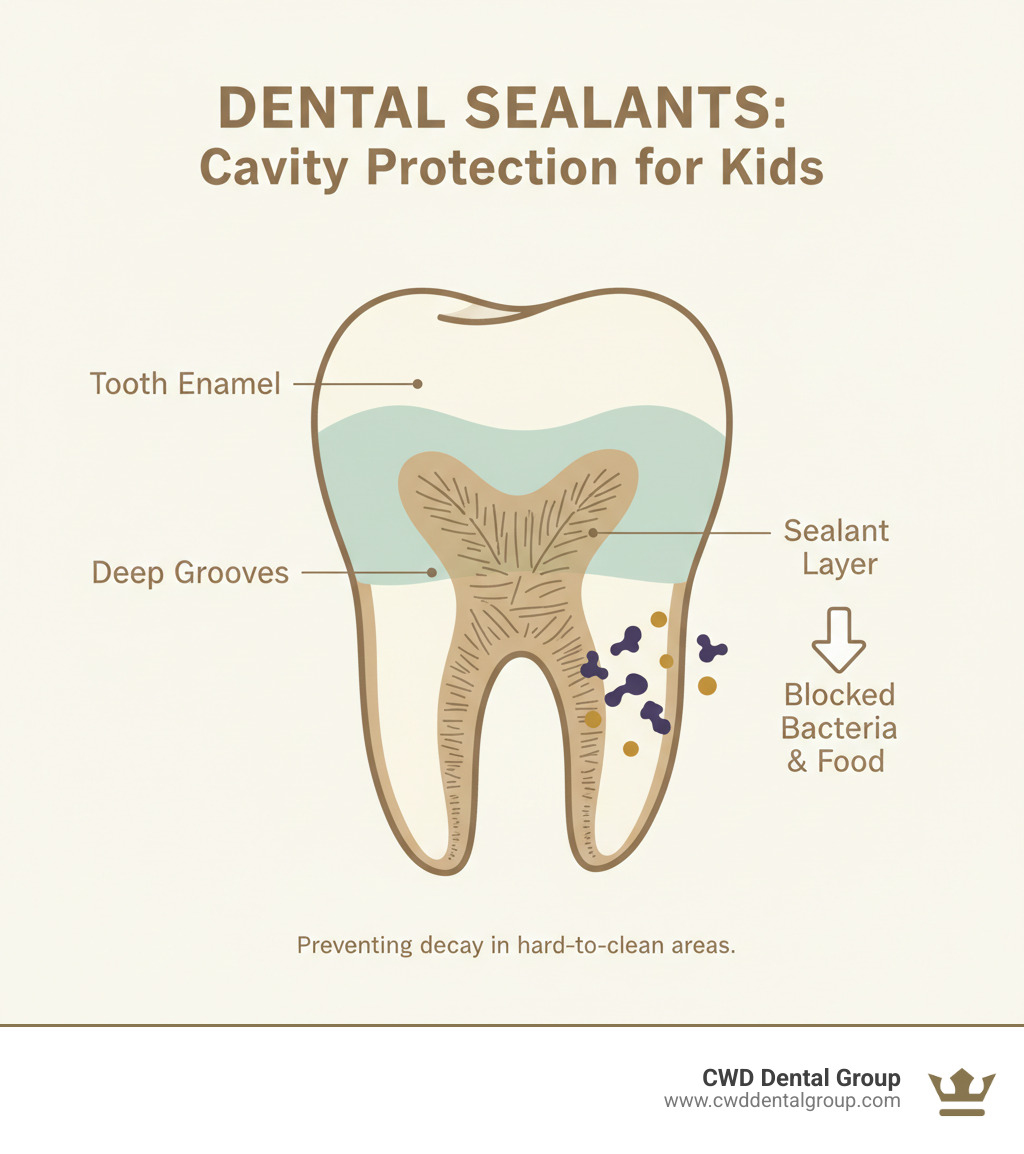
Think of dental sealants for kids as a protective raincoat for your child's teeth. They're thin coatings made from plastic resin material that dentists paint onto the chewing surfaces of back teeth.
Here's why they're so important: those back molars have deep grooves and pits that are incredibly hard to clean. In fact, these grooved and pitted areas can be narrower than a single toothbrush bristle. Even the most dedicated young brusher simply can't reach into those tiny crevices where food particles and bacteria love to hide.
When we apply a sealant, the material flows into these deep grooves and fissures, then hardens to create a smooth, protective barrier. This barrier seals off the vulnerable spots on the tooth, blocking food and germs from settling in and causing decay. The tooth surface becomes much easier to clean, and those cavity-causing bacteria lose their favorite hiding spots.
The results speak for themselves. According to CDC data on sealant effectiveness, sealants prevent 80% of cavities in the back teeth for two years after application, and continue protecting against 50% of cavities for up to four years. That's a significant reduction in decay risk, which means fewer painful toothaches and less time in the dental chair for your child.
Why are sealants recommended for '6-year' and '12-year' molars?
You'll often hear dental professionals talk about sealing "6-year molars" and "12-year molars." These are the first and second permanent molars, named for the approximate ages when they erupt.
The first permanent molars typically arrive around age 6, and the second set appears around age 12. These teeth are particularly important because they're the first permanent teeth to come in, and they do the heavy lifting when it comes to chewing.
Here's the challenge: the years between ages 6 and 14 are considered the cavity-prone years for children. Kids are still perfecting their brushing technique, and these newly erupted molars often have very deep grooves that are difficult for children to clean effectively. By applying dental sealants for kids as soon as these molars fully erupt, we provide proactive protection right from the start—giving these essential teeth the best defense against decay when they're most vulnerable.
When and Why Should Kids Get Sealants?
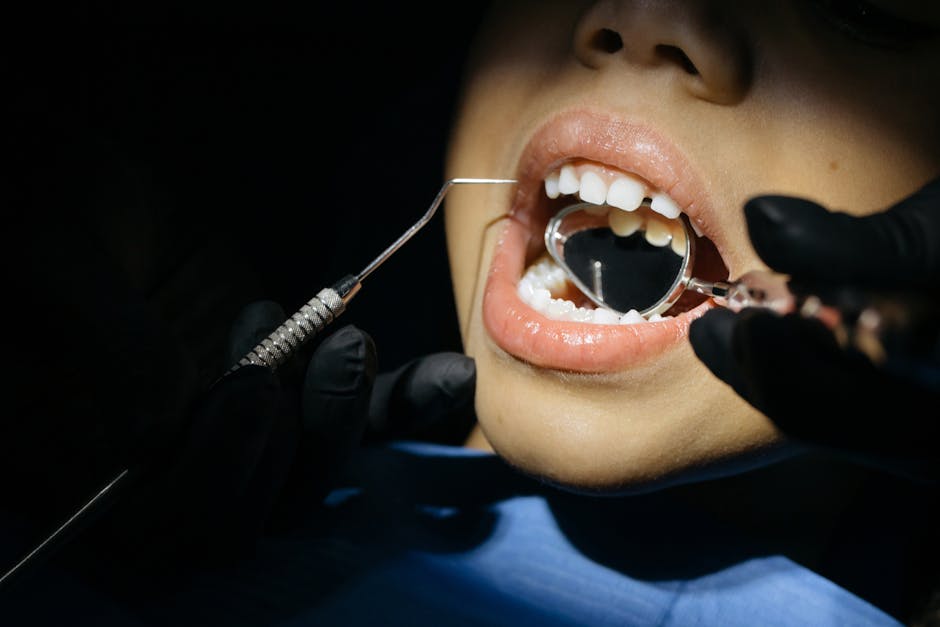
Timing is everything when it comes to dental sealants for kids. The sweet spot for this protective treatment is generally between ages 6 and 14, which coincides with when permanent molars make their grand entrance. Here's the thing: newly erupted teeth are like new recruits—they're vulnerable and need extra protection. The enamel on these fresh teeth hasn't fully matured yet, and those deep grooves we talked about earlier? They're basically open invitations for bacteria and food particles to move in and cause trouble.
But the real question is: why should you consider sealants for your child? The answer is simple—prevention is always better than treatment. Think about it this way: children without dental sealants are three times more likely to develop cavities in their first molars compared to kids who have them. That's not a small difference! This statistic tells us that sealants aren't just a "nice to have"—they're a powerful tool in protecting your child's smile.
When we apply sealants to those deep tooth grooves as soon as the permanent molars fully erupt, we're essentially giving decay no place to start. It's not about fixing a problem; it's about stopping one before it begins. And that means fewer appointments for fillings, less discomfort for your child, and more peace of mind for you as a parent.
At what age should children get dental sealants?
The best time to get dental sealants for kids is as soon as those permanent molars push through the gums. This happens in two predictable stages that most parents can plan for.
The first permanent molars (those "6-year molars" we mentioned earlier) typically erupt when your child is around age 6. Some kids get them a bit earlier at five, others closer to seven—every child develops at their own pace. The second permanent molars follow a similar pattern, usually arriving around age 12, though they can show up anywhere between eleven and fourteen years old.
The ADA recommends dental sealants for children ages 6-14, and we wholeheartedly agree with this guidance. The goal is to protect these teeth from the start—before any decay has a chance to take hold. When we seal the teeth early, we're giving your child the best possible foundation for a healthy, cavity-free smile throughout their teen years and beyond.
Can sealants be placed on baby teeth?
While dental sealants for kids are most commonly applied to permanent molars, you might be surprised to learn that baby teeth can also receive sealants in certain situations. It's not something we do for every child or every baby tooth, but when we notice particularly deep grooves or pits in primary molars, or when a child is at high risk for cavities, sealants can be a smart preventive measure.
Why would we seal baby teeth if they're just going to fall out anyway? Baby teeth are actually incredibly important members of your child's dental team. They're not just temporary placeholders—they're actively working to help your child speak clearly, chew properly, and maintain good nutrition during critical growth years.
Perhaps most importantly, baby teeth act as natural space holders for the permanent teeth developing underneath. When a baby tooth is lost too early because of decay, the neighboring teeth can drift into that empty space. This shifting can create crowding problems and alignment issues when the permanent teeth try to come in, potentially leading to the need for orthodontic treatment later.
According to the National Institute of Dental and Craniofacial Research, protecting baby teeth with sealants when appropriate can prevent premature loss and save families from more complex and expensive treatments down the road. At CWD Dental Group, we evaluate each child individually to determine whether sealing primary teeth makes sense for their unique situation.
The Dental Sealant Procedure for Kids: What to Expect
If you're picturing a long, uncomfortable dental appointment with drills and needles, you can relax. Getting dental sealants for kids is actually one of the easiest dental procedures your child will ever experience. There's no drilling, no shots, and no pain. In fact, most children find it completely comfortable—some even say it's easier than getting their teeth cleaned!
The entire process takes only a few minutes per tooth, which means your child will be in and out quickly. Even our youngest patients handle it well because there's really nothing to worry about. It's simply a matter of painting a protective coating onto the tooth and letting it harden.
How are dental sealants for kids applied?
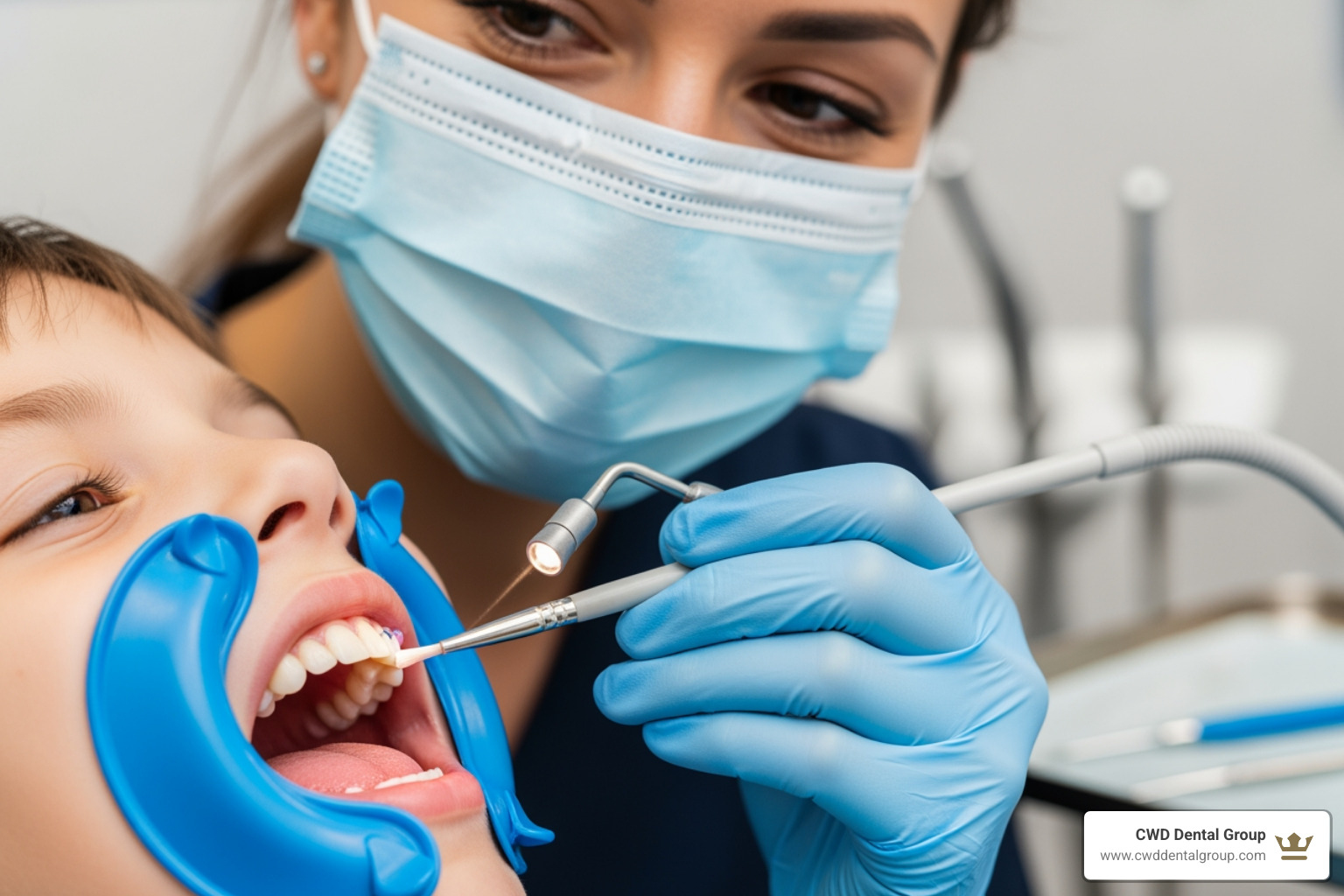
Our team at CWD Dental Group has applied countless sealants, and we've streamlined the application process to make it as quick and comfortable as possible. Here's what happens during your child's appointment:
First, we clean the tooth thoroughly using a special brush and polishing paste. This removes any plaque, food debris, or buildup from the chewing surface, ensuring we're working with a clean slate.
Next comes the etching step. We apply a mild acidic gel to the tooth surface for just a few seconds. Don't worry—this doesn't hurt at all! The gel creates tiny, microscopic grooves in the enamel that help the sealant stick better. Think of it like lightly sanding wood before you paint it—you're just preparing the surface for a strong bond.
After rinsing and drying the tooth, we make sure the surface is completely dry. This is actually one of the most important steps, because moisture can prevent the sealant from bonding properly. A dry tooth means a sealant that will last for years.
Then we paint on the liquid sealant using a small brush, carefully covering all the grooves and pits where cavities like to form. The sealant flows into even the tiniest crevices, filling them completely.
Finally, we use a special blue curing light to harden the sealant in just seconds. The light activates the material, changing it from a liquid into a durable, protective shield that bonds firmly to the tooth enamel. And just like that, your child's tooth has its own built-in armor against cavities!
Can children eat immediately after getting sealants?
Yes! This is one of the best parts about dental sealants for kids—there's no waiting around. The curing light hardens the material instantly, which means your child can eat and drink normally as soon as they leave our office. No special diet, no avoiding certain foods, and no uncomfortable waiting period.
Your child might notice that their bite feels slightly different at first, almost like there's a tiny bump on their tooth. This is completely normal and temporary. Within a day or so, they won't even remember it's there. The smooth surface actually makes chewing more comfortable in the long run because food slides right off instead of getting stuck in those deep grooves.
We don't require any special precautions after the procedure, though we always recommend that kids (and adults!) avoid excessively hard or sticky candies that can damage both natural teeth and sealants. But otherwise? Your child is good to go—snacks, lunch, dinner, whatever they want!
Are Dental Sealants for Kids a Safe and Durable Option?
When it comes to protecting your child's teeth, you want a solution that's both safe and built to last. The good news? Dental sealants for kids check both boxes beautifully. They're one of the most effective, non-invasive tools we have in our cavity-fighting arsenal, and they're backed by leading dental organizations nationwide.
Think of sealants as a long-term investment in your child's oral health. With proper care and regular check-ups, they provide years of reliable protection. During your child's routine Teeth Cleaning appointments at our Tallahassee, Havana, Quincy, Crawfordville, or Wakulla locations, our team will carefully inspect the sealants for any signs of wear or chipping. This ongoing monitoring is part of why sealants have such an impressive success rate—over 90% when properly applied and maintained.
The beauty of dental sealants for kids is that they're a smart, cost-effective prevention strategy. Rather than treating cavities after they form, we're stopping them before they start. That means fewer dental visits for fillings, less discomfort for your child, and more money in your pocket.
How long do sealants last and what causes them to fail?
Here's something that might surprise you: dental sealants for kids can last up to 10 years with proper care. Most sealants provide solid protection for an average of five to ten years, which covers a significant portion of those cavity-prone childhood years we talked about earlier.
Of course, your child's back teeth do a lot of heavy lifting—literally. All that chewing, grinding, and munching on everything from apples to popcorn means sealants experience natural wear and tear over time. They might chip or partially wear away, which is completely normal. This is exactly why we check them at every dental visit. If we spot any issues, we can easily repair or reapply the sealant right then and there.
Want to know the number one reason sealants fail prematurely? It's moisture contamination during the application process. If the tooth surface isn't kept completely dry when we're applying the sealant, it can't bond properly to the enamel. That's why our experienced team takes such care during the application—we know that a perfectly dry surface means a sealant that sticks around for the long haul.
Are there any risks, and do sealants contain BPA?
Let's address the elephant in the room: Are dental sealants for kids truly safe? The short answer is yes—they're extremely safe. The only potential concern is a possible allergic reaction to the sealant material, which is incredibly rare. If your child has known allergies to certain materials, just let our team know beforehand, and we'll discuss your options.
Now, about BPA (bisphenol A). We know this is a concern for many parents, and we're happy to address it head-on. Some dental sealants do contain trace amounts of BPA, but here's the important part: the exposure is minimal—so minimal that it's considered negligible by dental health experts. To put it in perspective, your child is exposed to more BPA from breathing in air, touching dust, handling a store receipt, or using certain cosmetics than they would ever get from dental sealants. In fact, the amount of BPA released from sealants is significantly less than from touching a receipt.
The American Dental Association has thoroughly reviewed the research and confirms that sealants are safe for children. Our team at CWD Dental Group uses materials that meet the highest safety standards while delivering the cavity-fighting protection your child needs. And here's one more note: while some sealants may include fluoride for additional benefit, most resin-based sealants don't contain fluoride themselves—they rely on their protective barrier to do the job.
Cost, Coverage, and Complete Cavity Prevention
Let's talk about something every parent cares about: saving money while keeping your child healthy. Dental sealants for kids are one of those rare win-win situations in healthcare. You're investing a small amount now to potentially avoid much larger expenses later. Think about it this way: sealing your child's teeth today can help you avoid the cost, time, and stress of treating cavities tomorrow.
When we see children who need Cavity Treatment for Kids, we often wish their parents had known about sealants earlier. A filling can cost several times more than a sealant, not to mention the discomfort your child might experience. Sealants work best as part of a complete oral health plan that includes regular check-ups, proper brushing and flossing, and a healthy diet. They're not meant to replace these habits – they're meant to strengthen them.
How much do sealants cost and does insurance cover them?
Here's the good news for families in Tallahassee, Havana, Quincy, Crawfordville, and Wakulla: dental sealants for kids are surprisingly affordable. Without insurance, you can expect to pay between $30 and $60 per tooth. Now, compare that to the cost of treating a cavity, which typically runs between $150 and $300 per tooth. The math makes sense, doesn't it?
Even better, most dental insurance plans recognize sealants as preventive care and cover them for children, often through age 14 or 18. Many insurance companies understand that paying for prevention now saves them from paying for more expensive treatments later. If your family has coverage through Medicaid or CHIP, there's a good chance sealants are covered as well. We always recommend calling your insurance provider to confirm your specific benefits and coverage details.
If you're looking for additional resources or need help finding coverage options, the Insure Kids Now Dentist Locator can connect you with providers in our area who accept various insurance plans. Some local schools also offer sealant programs, making this important preventive care accessible to even more families.
Can kids still get cavities with sealants, and what are the alternatives?
This is an important question, and we want to be completely honest with you: yes, children can still develop cavities even with sealants. But before you worry, let us explain why – and what you can do about it.
Dental sealants for kids protect the chewing surfaces of back teeth, which is where most childhood cavities occur. However, they don't cover every surface of every tooth. Cavities can still form between teeth where the sealant doesn't reach, which is why flossing remains crucial. Decay can also develop on unsealed surfaces like the front teeth or the sides of molars. And if a sealant chips or wears away without being repaired, that previously protected groove becomes vulnerable again.
The key point here is that sealants are not a substitute for good oral hygiene – they're a powerful addition to it. Think of them as one important tool in your cavity-prevention toolbox, not the only tool.
So what else belongs in that toolbox? Professional fluoride treatments strengthen tooth enamel and make it more resistant to the acids that cause decay. We often recommend these during regular check-ups. Of course, nothing replaces good brushing and flossing habits at home. Your child should brush twice daily with fluoride toothpaste and floss once a day to clean those areas between teeth where sealants can't reach.
Finally, let's talk about diet. A healthy diet low in sugary foods and drinks makes a huge difference. Sugar feeds the bacteria that cause cavities, so limiting soda, candy, and sticky snacks helps protect all tooth surfaces. Encouraging your child to drink water throughout the day and choose healthier snacks like fruits, vegetables, and cheese can significantly reduce their cavity risk.
When you combine dental sealants for kids with these essential habits, you're giving your child the strongest possible defense against tooth decay. At CWD Dental Group, we're here to partner with you in protecting your child's smile for the long haul.
Protect Your Child's Smile with Dental Sealants
We've covered a lot of ground together about dental sealants for kids, and if there's one thing we hope you take away, it's this: sealants are a powerful ally in protecting your child's smile. They're safe, painless, and remarkably effective at preventing cavities in those hard-to-reach grooves of back teeth. This simple procedure, which takes just minutes, can save your family from the stress, discomfort, and expense of treating cavities later on.
Think about it – a quick visit now could mean years of protection for your child's teeth during those crucial growing years. That's time, money, and potential pain avoided. And honestly, what parent doesn't want that peace of mind?
At CWD Dental Group, our Pediatric Dentist team understands how important your child's oral health is to you. We've helped countless families across Tallahassee, Havana, Quincy, Crawfordville, and Wakulla protect their children's smiles with dental sealants and comprehensive preventive care. Our experienced dentists make the process comfortable and even fun for kids, turning what could be a scary dental visit into a positive experience.
Whether your child's six-year molars just erupted or their twelve-year molars are on the way, now is the perfect time to consider sealants. We'd love to answer any questions you have and discuss whether dental sealants for kids are right for your family.
Ready to give your child's teeth the protection they deserve? Schedule a Visit with our caring team at CWD Dental Group today. Let's work together to keep your child's smile healthy, bright, and cavity-free for years to come.