
The Myth of Permanent Teeth Whitening: What You Need to Know
Understanding the Reality of Permanent Teeth Whitening
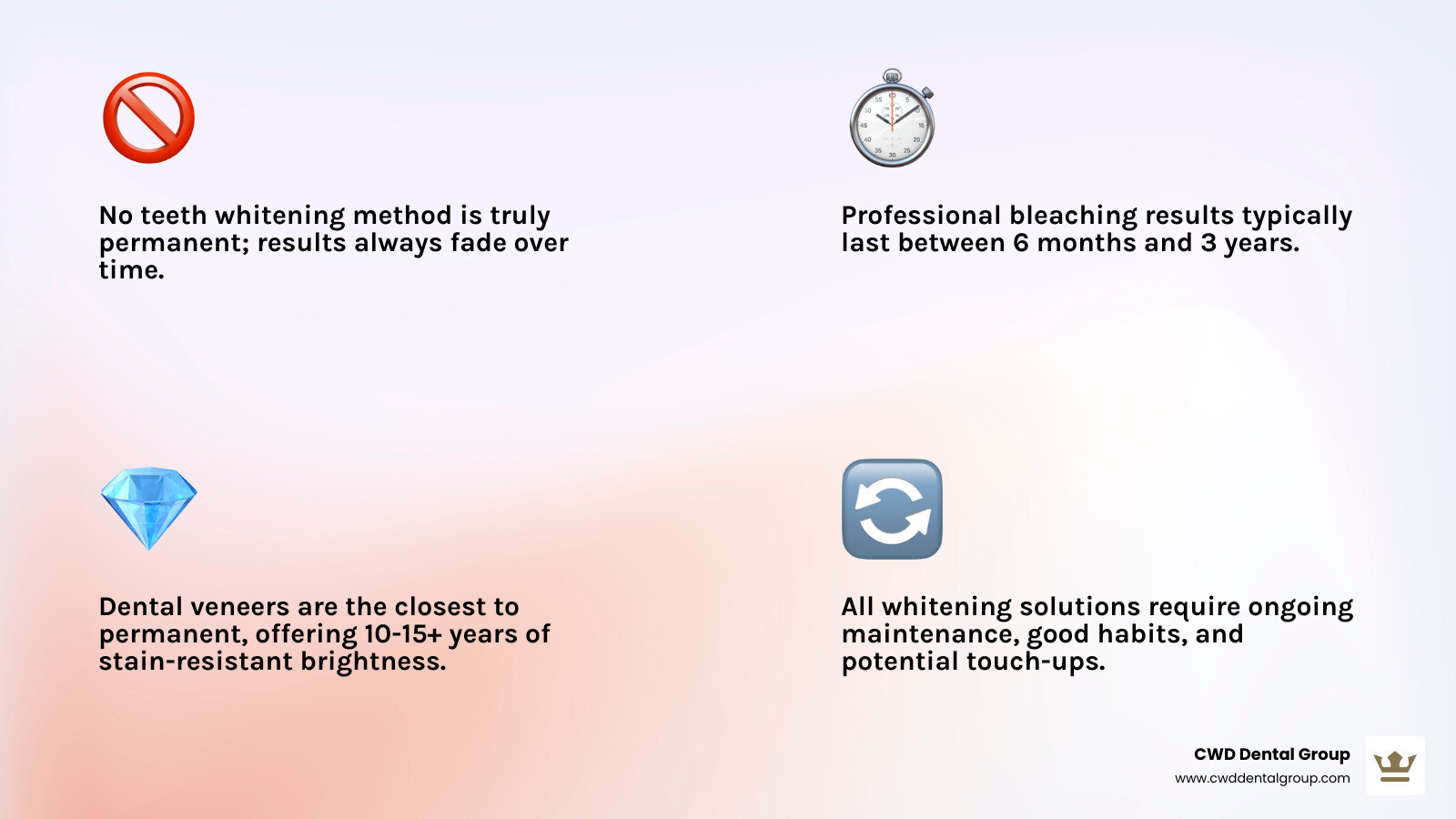
Permanent teeth whitening is a popular search, but the truth is that no whitening method lasts forever. Even the most effective professional treatments fade over time as your teeth absorb stains from food, drinks, and aging. Here's a quick look at how long you can expect results to last:
- Professional Bleaching: 6 months to 3 years
- Over-the-Counter (OTC) Products: 1 to 3 months
- Dental Veneers: 10 to 15+ years (the closest to permanent)
While nearly 90% of patients ask for teeth whitening, maintaining a bright smile requires ongoing care and realistic expectations. The key is understanding that longevity depends on the treatment you choose and your daily habits. Some solutions, like professional whitening or veneers, offer long-lasting results, but all require maintenance to keep your smile looking its best.
With the right approach, you can enjoy a brighter smile for years. This guide will help you understand your options and set achievable goals for achieving—and maintaining—a confident smile.
Why Teeth Stain: Understanding Intrinsic vs. Extrinsic Discoloration
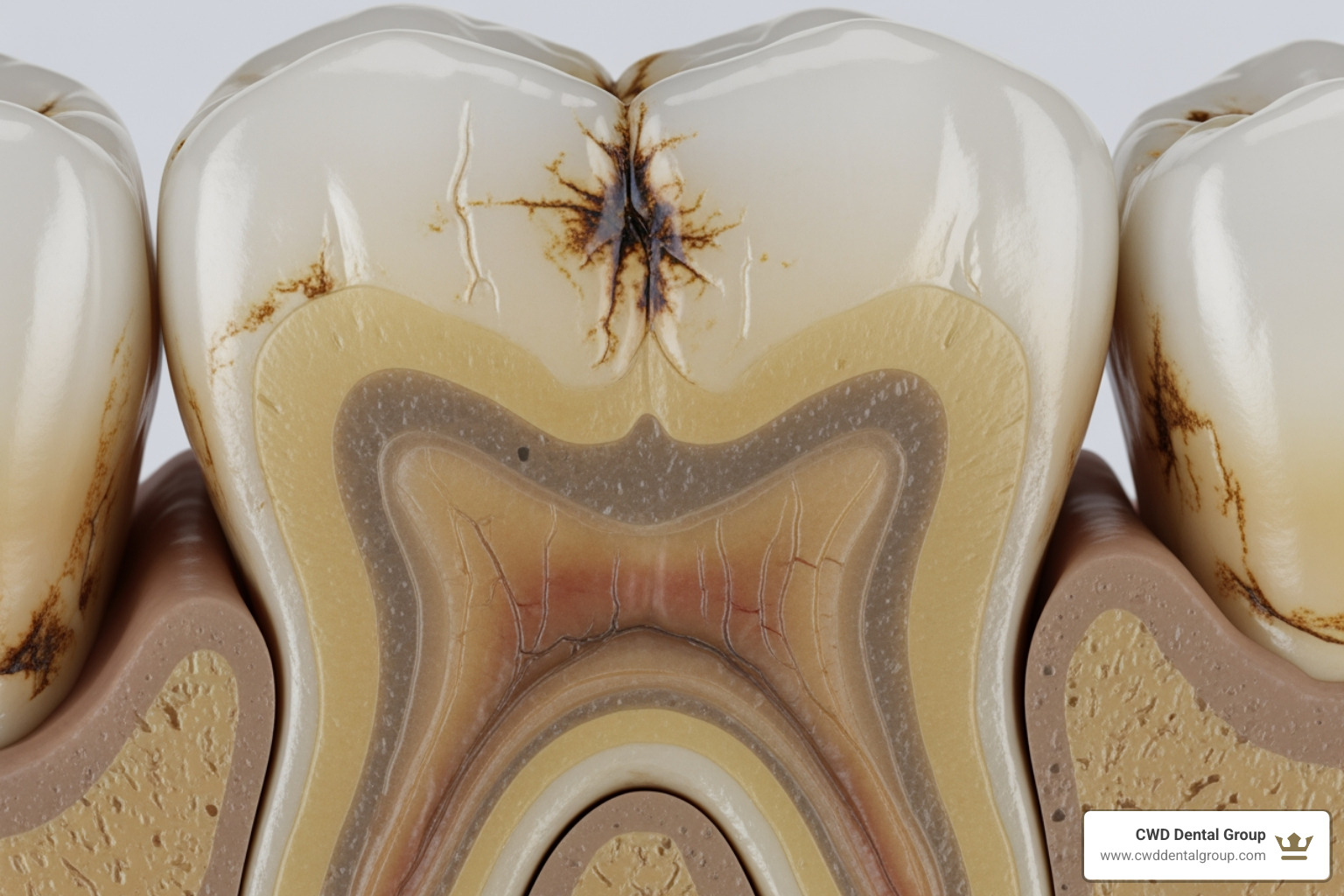
Before exploring permanent teeth whitening solutions, it helps to understand why teeth stain. Discoloration comes in two forms—extrinsic (on the surface) and intrinsic (deep inside the tooth)—and each requires a different approach.
Extrinsic Stains: Surface-Level Discoloration
Extrinsic stains are surface marks on your tooth enamel. Because your enamel is porous, it can trap pigments from foods and drinks, leading to a yellow or brown appearance. These are the easiest stains to treat.
Common causes include:
- Coffee, Tea, and Red Wine: These drinks contain dark pigments (chromogens) and tannins that cling to enamel.
- Tobacco Use: Tar and nicotine from smoking or chewing tobacco create stubborn yellowish-brown stains.
- Dark Foods: Berries, tomato sauce, soy sauce, and balsamic vinegar can dull your smile over time.
- Poor Oral Hygiene: Plaque buildup makes it easier for stains to take hold.
Since extrinsic stains are on the surface, they respond well to most whitening treatments, from professional bleaching to OTC products.
Intrinsic Stains: Deeper Discoloration
Intrinsic stains develop within the dentin, the layer beneath your enamel. They are much harder to remove with conventional whitening methods.
Common causes include:
- Aging: As enamel thins with age, the yellowish dentin underneath becomes more visible.
- Trauma: An injury to a tooth can cause internal bleeding or nerve damage, leading to darkening from the inside out.
- Medications: Certain antibiotics (like tetracycline), antihistamines, and blood pressure drugs taken during childhood can cause permanent discoloration.
- Genetics: Some people are naturally born with thinner enamel or a darker tooth shade.
- Fluorosis: Excessive fluoride exposure during childhood can create white or brown spots on the enamel.
Understanding your stain type is the first step. At CWD Dental Group, our dentists evaluate your discoloration to recommend the most effective, long-lasting treatment.
A Spectrum of Whiteness: Comparing Your Whitening Options
From drugstore strips to professional treatments, your whitening options vary in longevity, cost, and effectiveness. The key difference is their ability to tackle specific types of stains.
Here's a quick comparison:
| Method | Longevity | Cost-Effectiveness | Best Use Cases |
|---|---|---|---|
| Over-the-Counter Products | 1-3 months | Low initial cost, frequent repurchase | Minor surface stains, quick touch-ups |
| Professional Bleaching | 6 months to 3 years | Moderate to high | Significant extrinsic stains, moderate intrinsic stains, dramatic results |
| Cosmetic Restorations | 5-15+ years | High | Deep intrinsic stains, structural issues, full smile makeovers, permanent teeth whitening |
Most treatments use hydrogen peroxide (fast-acting, for in-office use) or carbamide peroxide (slower-acting, for take-home kits). Professional formulas may also include ingredients like fluoride and potassium nitrate to reduce sensitivity and strengthen enamel. At CWD Dental Group, we customize our approach based on your needs. Explore our Our Services page to learn more.
Over-the-Counter (OTC) Products
Convenient and affordable, OTC products are best for minor touch-ups.
- Whitening toothpastes use mild abrasives to polish away surface stains, brightening your smile by a shade or two without bleaching.
- Whitening strips use a low-concentration peroxide gel to lighten teeth by 1-2 shades over a few weeks.
- Whitening rinses contain low levels of hydrogen peroxide and may offer minimal improvement (1-2 shades) after three months of daily use.
Results from OTC products are modest and short-lived, typically lasting 1-3 months. Since many are not FDA-regulated, it's wise to consult a dentist before use.
Professional Teeth Bleaching
For more dramatic and lasting results, professional bleaching is the best option. These supervised treatments are safer and more effective than OTC products.
- In-office whitening offers the fastest results. In about an hour, a high-concentration peroxide gel can brighten your teeth by several shades, with results lasting 12-24 months.
- Dentist-supervised take-home kits use custom-fitted trays and professional-grade gel. You wear the trays for a few hours daily for 10-14 days. Results are gradual but significant, lasting 6-12 months.
With good habits, professional bleaching results can last up to three years.
Potential Risks and Side Effects of Bleaching
Professional whitening is generally safe, but temporary side effects can occur. The most common is tooth sensitivity, as peroxide temporarily irritates the tooth's nerve. This usually fades within a few days. Gum irritation can also happen if the gel touches soft tissues, which is why professional application with protective barriers is crucial.
Serious risks are rare with professional supervision. However, overuse of whitening products, especially high-concentration or unregulated ones, can potentially lead to enamel erosion. That's why guidance from our dentists in Tallahassee, Havana, Quincy, Crawfordville, and Wakulla is so important. For more information, see this scientific review: Tooth Whitening: What We Now Know.
Long-Term Solutions: The Quest for Permanent Teeth Whitening
When bleaching isn't enough to address deep intrinsic stains, cosmetic dentistry offers a more permanent solution. These treatments physically cover the tooth, providing a lasting change in color and shape. They are ideal for tetracycline stains, severe discoloration, or for patients who want to correct other issues like chips or gaps at the same time.
While the upfront investment is higher, these options eliminate the need for frequent whitening touch-ups, making them a cost-effective solution in the long run.
Dental Veneers: A Lasting Change
Porcelain veneers are the gold standard for a long-term smile makeover. These are thin, custom-made porcelain shells bonded to the front of your teeth. They completely mask deep stains, chips, and gaps, creating a uniform, bright smile.
Porcelain is highly resistant to staining from coffee, tea, and red wine, so your smile stays bright. With proper care, veneers can last 10-15 years or more, making them the closest option to permanent teeth whitening.
The procedure is irreversible, as a small amount of enamel must be removed to ensure a natural fit. This means the tooth will always need a covering.
Dental Bonding: A Versatile and Durable Choice
Dental bonding is a more affordable and less invasive alternative to veneers. In this single-visit procedure, we apply a tooth-colored composite resin to your tooth, sculpt it to the desired shape, and harden it with a special light.
Bonding is excellent for covering stains, repairing chips, and closing small gaps. While not as stain-resistant as porcelain, bonding is still a durable choice that can last 5-10 years with proper care.
Both veneers and bonding offer comprehensive solutions that go beyond simple color correction. At CWD Dental Group, we can help you decide which option best fits your goals and budget. Explore our cosmetic options on our Our Services page.
How to Maintain Your Bright Smile for as Long as Possible
Achieving a brighter smile is just the first step; maintaining it requires daily commitment. The longevity of your permanent teeth whitening results depends on your lifestyle, oral hygiene, and follow-up care.

Lifestyle and Dietary Habits
Your daily habits have a major impact on your smile's brightness. To minimize new stains:
- Limit Staining Foods and Drinks: Be mindful of coffee, red wine, dark berries, tomato sauce, and dark sodas.
- Use a Straw: Drinking dark beverages through a straw helps them bypass your front teeth.
- Rinse with Water: Swish with water immediately after consuming staining items to wash away pigments before they set.
- Quit Tobacco: Smoking and tobacco use cause severe, stubborn stains and harm your overall oral health. Quitting is the most impactful change you can make.
The Importance of Oral Hygiene and Professional Care
A solid at-home routine is the foundation for a lasting white smile.
- Brush and Floss Daily: Brush twice a day for two minutes and floss once a day to remove plaque and prevent stain buildup between teeth.
- Use a Whitening Toothpaste: A non-abrasive whitening toothpaste can help gently polish away new surface stains.
- Schedule Regular Cleanings: Professional Teeth Cleaning appointments every six months are essential. Our hygienists remove tartar and extrinsic stains that brushing can't.
- Consider Touch-Ups: For professional bleaching, periodic touch-ups (e.g., an annual in-office session or using a take-home kit for a few days) can combat new stains and keep your smile consistently bright.
By combining smart habits with professional maintenance, you can maximize the lifespan of your whitening investment.
Frequently Asked Questions about Teeth Whitening Longevity
Here are answers to the most common questions we hear from patients about the long-term effects and expectations of teeth whitening.
Does teeth whitening damage your enamel?
The short answer is no—professional whitening is safe for enamel when done correctly. The peroxide in whitening gels temporarily opens microscopic pores in your enamel to break down stain molecules. Afterward, your enamel naturally remineralizes and rehydrates, closing these pores. Your saliva and fluoride from toothpaste help this natural repair process.
Safety lies in professional supervision. At CWD Dental Group, we use calibrated concentrations and protect your gums. However, overuse of OTC products can cause damage, such as enamel erosion or sensitivity, as they are less regulated. Always consult a dentist before starting a whitening regimen.
How many shades whiter can my teeth get?
Results vary for each person, as your whitening potential depends on your starting shade and the type of stains you have. Teeth with yellow or brown tones tend to respond best to whitening. Grayish tones, often caused by medications or trauma, are more resistant to bleaching.
In-office treatments can lighten teeth by 8-10 shades or more in some cases. This is because professional treatments use higher, more effective concentrations of whitening agents. During your consultation, we'll assess your teeth and give you a realistic estimate of what you can achieve, ensuring you have clear expectations.
Will whitening work on my crowns, veneers, or fillings?
No, bleaching agents only work on natural tooth enamel. Dental restorations like crowns, veneers, and fillings are made from non-porous materials like porcelain or composite resin that do not change color.
If you whiten your teeth, your natural enamel will get brighter, but your dental work will not. This can create a mismatched appearance that makes restorations stand out.
To avoid this, it's best to plan whitening before getting new restorations. Whiten your natural teeth first. Then, we can create a new crown or veneer that perfectly matches your newly brightened smile for a seamless, natural look.
Conclusion: Your Path to a Lasting, Radiant Smile
We've explored everything from drugstore strips to porcelain veneers, and the main takeaway is this: permanent teeth whitening is a myth. No method lasts forever without some form of maintenance.
Professional bleaching can last for years with touch-ups, while veneers offer a decade or more of brightness. The longevity of your results depends on the method you choose, your daily oral care, and your lifestyle habits.
This is why partnering with a dentist is so important. At CWD Dental Group, we don't use a one-size-fits-all approach. Our experienced team serves patients throughout Tallahassee, Havana, Quincy, Crawfordville, and Wakulla, providing personalized care custom to your unique smile and goals.
We'll assess your stain type, discuss your expectations, and recommend the safest, most effective treatment. After you achieve your desired shade, we'll help you create a maintenance plan to keep your smile radiant for as long as possible.
Your journey to a brighter, more confident smile starts with a conversation. We'd love to help you achieve—and maintain—the smile you've been dreaming of.
Ready to take the first step? Schedule a Visit with CWD Dental Group today.