
Rooting for Relief: Finding Your Ideal Endodontist
Understanding the Importance of Specialized Endodontic Care
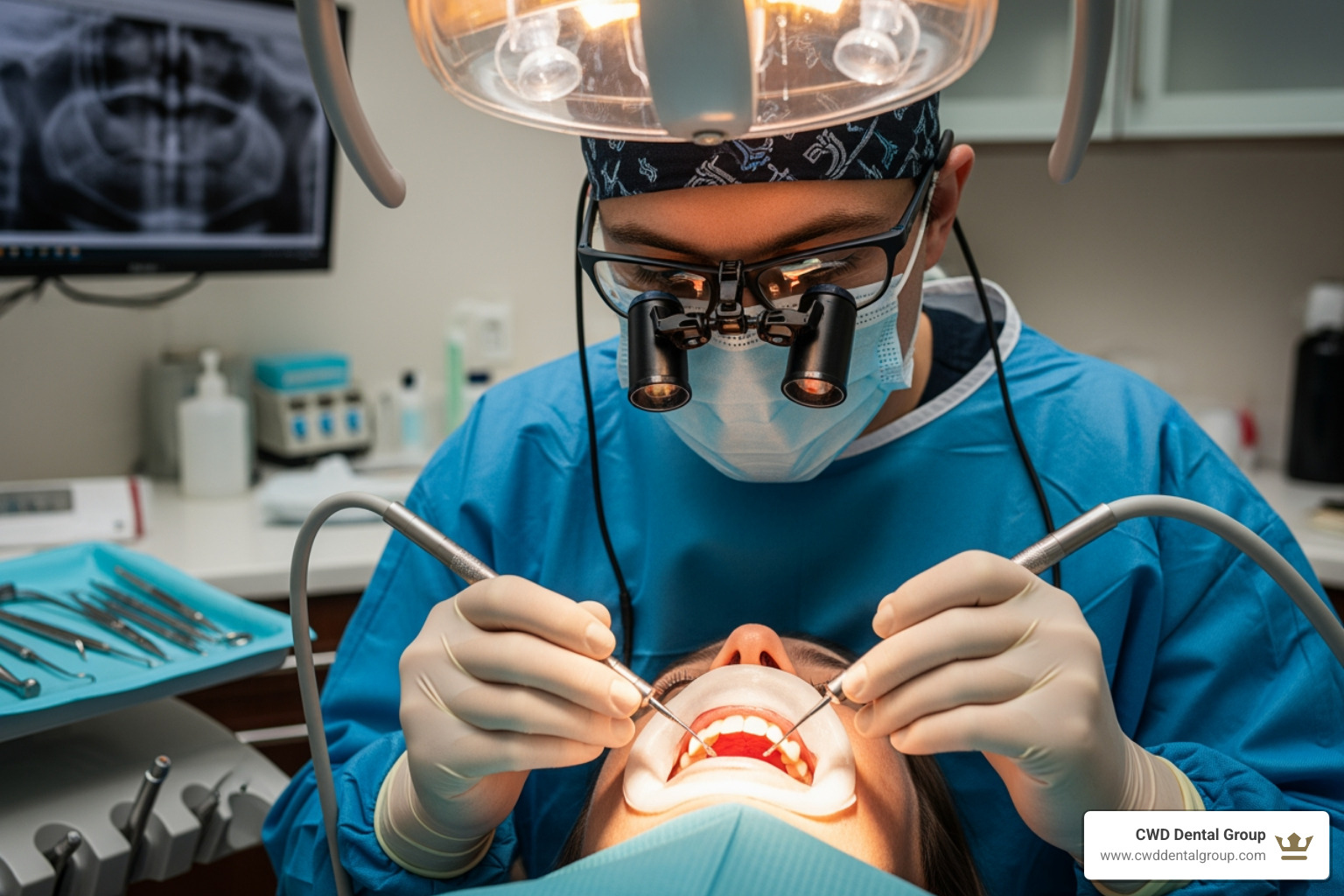
Searching for the best endodontics near me is the first step toward saving a tooth and finding relief from serious dental pain. If you're looking for specialized tooth care, here's what you need to know.
Quick Guide to Finding the Best Endodontist:
- Look for Board Certification - Only a small percentage of endodontists achieve Diplomate status with the American Board of Endodontics.
- Check Technology - Top specialists use 3-D imaging, surgical microscopes, and laser systems.
- Read Patient Reviews - Look for consistent positive feedback about pain-free experiences.
- Verify Experience - Endodontists perform root canals daily, completing a significant portion of the 15 million procedures done annually in the US.
- Confirm Success Rates - The best specialists maintain success rates above 95%.
When tooth pain strikes, time is critical. Root canal procedures are performed almost 41,000 times daily across the United States and remain the most effective way to save a severely compromised tooth.
Endodontists are dental specialists who complete 2-3 years of advanced training beyond dental school. They focus exclusively on diagnosing tooth pain, performing root canals, and saving natural teeth. Their specialized training gives them incredible precision for complex treatments.
Think of it this way: while your general dentist handles a wide range of dental needs, an endodontist is the specialist you see when the inner part of your tooth—the pulp—becomes infected or damaged. Studies show that root canals performed by endodontists have higher success rates than those done by general dentists, particularly on molars.
The good news? Modern root canal therapy is nothing like the painful procedures of the past. Today's treatments are as routine and comfortable as getting a filling, thanks to advanced anesthesia and technology.
I'm Kayle Vernon, and with a decade of experience in healthcare marketing, I've seen what separates exceptional endodontic care from the rest. I've helped countless patients find the best endodontics near me and understand why specialized care makes all the difference.
Do You Need an Endodontist? Key Signs and Symptoms
How do you know when it's time to see a specialist? An endodontist specializes in diagnosing and treating tooth pain related to the inner pulp of the tooth. Recognizing the signs is crucial for saving your natural tooth and finding relief.
Here are the key indicators that you might need to see an endodontist:
- Persistent Tooth Pain: Unlike a fleeting ache, this pain is constant, throbbing, and may worsen when you lie down. It's a strong sign of pulp inflammation or infection.
- Sensitivity to Hot and Cold: If pain from hot or cold temperatures lingers for more than a few seconds, it often points to damaged nerves in the tooth's pulp.
- Swollen Gums: Swelling or a small, pimple-like bump (fistula) on the gums near a tooth can indicate an abscess, which is a pocket of pus caused by a bacterial infection.
- Discomfort When Chewing: Sharp or dull pain when biting or chewing can mean the ligaments around the tooth's root are inflamed due to infection.
- Tooth Discoloration: A tooth that darkens or becomes discolored compared to its neighbors may indicate that the inner pulp has died, often due to trauma or decay.
- Cracked or Chipped Tooth: A crack or chip can expose the tooth's inner pulp to bacteria, leading to infection. Even a small, hairline crack can be a pathway for bacteria.
- Tooth Injury: Any trauma to a tooth, even without a visible crack, can damage the pulp. Symptoms may not appear immediately but can lead to infection later on.
If you're experiencing any of these symptoms, don't hesitate to seek professional advice. Early intervention is key to successful treatment. For more information about our comprehensive dental services, including endodontic care, please visit our Our Services page.

When Pain Isn't the Only Warning Sign
Sometimes, the signs you need endodontic care are subtle. An abscess on the gums, which looks like a small pimple, is a clear sign of an underlying infection that needs professional attention, even if it doesn't hurt.
Another symptom is tooth mobility. If a tooth feels loose, it could be due to an infection spreading from the pulp to the surrounding bone. While gum disease can also cause this, when combined with other symptoms, it strongly suggests an endodontic issue.
Referred pain is also a tricky symptom. Pain from an infected tooth can be felt in your jaw, ear, or head, making it difficult to pinpoint the source. An endodontist is an expert in diagnosing this type of pain.
It's vital to understand that the absence of pain doesn't mean there isn't a problem. An infection can be present without causing discomfort. This is why regular dental check-ups are so important. Delaying treatment can increase the risk of severe complications.
The Dangers of Ignoring an Infected Tooth
Ignoring an infected tooth can have serious consequences. If left untreated, the infection will likely cause the tooth to die, requiring extraction. But it's not just about losing a tooth; the infection can spread.
Bacteria from an infected tooth can enter your bloodstream and travel to other parts of your body, potentially causing systemic health issues. This is why prompt evaluation and care are essential at the first sign of infection.
Delaying a recommended root canal allows the infection to worsen, causing more damage to the tooth and surrounding bone. This can make treatment more complex and may make saving the tooth impossible. While extraction is sometimes necessary, it’s always best to try and save your natural tooth to support your overall health.
Endodontist vs. General Dentist: Why Specialization Matters
When facing complex tooth pain or the need for a root canal, you might wonder whether to see your general dentist or an endodontist. While general dentists are highly skilled and can perform some root canals, an endodontist offers a level of specialization that often leads to better outcomes for intricate cases.
Here's a quick comparison:
| Feature | Endodontist | General Dentist |
|---|---|---|
| Training | 2-3 years of specialized training beyond dental school. | General dental degree. |
| Experience | Performs an average of 25 root canals per week. | Typically performs 2-3 root canals per month. |
| Technology | Uses advanced tools like surgical microscopes and 3-D imaging. | Uses standard dental equipment. |
| Success Rates | Generally higher, especially in complex cases. | Good for straightforward cases. |
For more background on endodontic specialty training and standards of care, you can review the American Association of Endodontists overview on Wikipedia, which explains how endodontists are trained and certified.

Here are some of the cutting-edge technologies that a top-tier endodontic practice employs:
- 3-D Cone Beam CT Imaging (CBCT): Provides detailed 3D images of your teeth and bone, allowing for precise diagnosis and treatment planning of complex root canal anatomy.
- Surgical Microscopes: Magnify the treatment area up to 25 times, providing superior illumination and allowing for meticulous precision. This helps in finding and treating tiny or calcified canals.
- Laser Cleaning and Irrigation: Lasers can be used to sterilize root canals more effectively than traditional methods, helping to eliminate bacteria deep within the tooth.
- Advanced Rotary Systems: These flexible, motorized instruments clean and shape root canals more efficiently and comfortably than older manual files.
- Digital X-rays: Offer instant images with significantly less radiation exposure than traditional film X-rays, aiding in quick and accurate diagnosis.
- Diagnostic Pulp Testers: These tools help determine if a tooth's pulp is healthy or requires a root canal, ensuring treatment is only performed when necessary.
- Obturation Delivery Systems: After cleaning, modern systems fill the root canals with a warm, flowable material, creating a superior seal to prevent reinfection.
By combining specialized training with these advanced technologies, endodontists can tackle even the most challenging cases with confidence and a higher probability of success.
How to Find the Best Endodontics Near Me
When you're in pain, finding the best endodontics near me can feel overwhelming. However, with a clear strategy, you can locate a qualified and compassionate endodontist in Tallahassee, Havana, Quincy, Crawfordville, or Wakulla, Florida.
Here's an actionable guide to help you find the right specialist:
- Start with a Referral: Your general dentist can often recommend a trusted endodontist who understands your dental history.
- Check for Board Certification: A Diplomate of the American Board of Endodontics has demonstrated advanced expertise and a commitment to the highest standards of care.
- Read Patient Reviews: Check Google, Yelp, or Healthgrades for consistent positive feedback on patient experience, comfort, and communication.
- Evaluate the Technology: A modern practice will use advanced tools like 3-D imaging and surgical microscopes. Check their website or ask about their equipment.
- Consider Their Experience: Ask about their experience with complex cases, especially if your situation is not straightforward.
- Schedule a Consultation: Use this visit to meet the team, see the facility, and ensure you feel comfortable with their approach to care.
Tips for Searching 'Best Endodontics Near Me' Online
Your online search is a powerful tool. Here’s how to optimize it:
- Use Specific Search Terms: Instead of just "dentist," try "endodontist Tallahassee FL," "root canal specialist Havana," or "endodontics Quincy."
- Check Local Directories: Use specialized dental directories like the American Association of Endodontists (AAE) website or local business listings for verified information.
- Verify Board Certification: Many endodontists will proudly display their board certification on their websites.
- Look at Before-and-After Photos (if available): Some practices may showcase restorative work that followed endodontic treatment, giving you an idea of their quality of care.
- Assess the Website: A professional, informative website often reflects a well-organized and patient-focused practice.
Questions to Ask When Choosing the Best Endodontics Near Me
Once you've identified a few potential practices, preparing a list of questions can help you choose the right one. We encourage you to be an active participant in your healthcare decisions!
Here are some key questions we recommend asking:
- What is your experience with complex cases like mine?
- What advanced technology do you use for diagnosis and treatment (e.g., CBCT, surgical microscopes)?
- Do you offer sedation options for anxious patients?
- Can you explain the procedure in detail, including potential risks and benefits?
- What are the estimated costs of the treatment, and what payment plans or financing options are available?
- How does your office handle insurance claims and what is my estimated out-of-pocket expense?
- What are your typical success rates for the procedure I need?
- How do you ensure patient comfort throughout the process?
- What are the aftercare instructions and what should I expect during recovery?
- How quickly can I get an appointment, especially if I'm in pain?
Asking these questions will give you a sense of the practice's commitment to patient care. We believe in transparency and want you to feel completely confident in your choice. To learn more about the experienced dentists who lead our team, please visit our Meet our experienced dentists page.
Your Endodontic Journey: What to Expect
We understand that the idea of a root canal can cause anxiety, but modern endodontic treatment is far from the intimidating stories of the past. Our primary goal is to provide the highest quality endodontic care in a comfortable and positive environment.
Thanks to advanced techniques and anesthesia, your endodontic journey will be as routine as getting a filling. We prioritize your comfort every step of the way, aiming for a stress-free experience. Our compassionate team is dedicated to providing gentle care, managing any potential pain, and reducing anxiety so you can relax during your appointment.
Preparing for Your Endodontic Appointment
Proper preparation can help ensure a smooth and successful appointment. We want you to feel ready and informed before you arrive.
Here’s what you can do to prepare:
- Provide Your Medical History: Be thorough when providing your complete medical history, including any pre-existing conditions, allergies, and recent surgeries.
- List All Medications: Bring a comprehensive list of all prescription and over-the-counter medications, vitamins, and supplements you are currently taking.
- Gather Insurance Information: Have your dental insurance card and any relevant policy information ready so we can help you optimize your benefits.
- Complete Forms in Advance: If possible, use our patient portal to complete any necessary forms before your appointment to save time.
- Arrange for Transport (if sedated): If you opt for sedation dentistry, you will need a responsible adult to drive you to and from your appointment.
- What to Eat Before Your Visit: Unless advised otherwise, you can eat a light meal before your appointment. Avoid heavy meals or excessive caffeine.
- Ask Questions: If you have any questions or concerns, please don't hesitate to call us. We're here to help.
We strive to make your experience as convenient as possible. To schedule your visit, please use our Make an Appointment page.
Recovery and Aftercare for the Best Outcome
Proper recovery and aftercare are vital for the long-term success of your treated tooth. With a success rate that exceeds 95%, root canal therapy is highly effective, but your cooperation in aftercare is key.
Here’s what to expect and how to care for your tooth after the procedure:
- Post-Procedure Discomfort: It's normal to experience mild discomfort or sensitivity for a few days. We will provide instructions for pain management, which may include over-the-counter pain relievers or a prescription. Take any prescribed antibiotics as directed.
- Avoiding Hard Foods: For the first few days, avoid chewing on the treated tooth. Stick to soft foods and avoid anything hard, sticky, or crunchy that could damage the temporary filling.
- Proper Oral Hygiene: Continue to brush and floss regularly, being gentle around the treated area. Good oral hygiene is essential for healing.
- Following Up for a Permanent Crown: A treated tooth often needs a permanent crown to protect it from fracture and restore its function. It's important not to delay this follow-up appointment with your general dentist.
- When to Call the Dentist: Contact our office immediately if you experience severe pain, swelling, an allergic reaction, if your temporary filling comes out, or if you have a fever.
Understanding the Costs of Endodontic Care
Understanding the financial aspects of endodontic treatment is an important part of the process. The cost of a root canal can vary, but it's best to view it as an investment in your long-term oral health.
Here are the primary factors influencing the cost:
- Tooth Location: Front teeth are generally less expensive to treat than premolars or molars, which have more root canals and are more complex.
- Complexity of Treatment: A straightforward root canal will cost less than a complex case involving calcified canals or unusual anatomy.
- Retreatment vs. Initial Treatment: If a tooth requires a second root canal, the cost may be higher due to the added complexity of removing the old filling material.
- Additional Procedures: Sometimes, endodontic microsurgery (like an apicoectomy) may be necessary, which will incur additional costs.
- Materials Used: The type of materials used for filling the canals and the final restoration (e.g., a crown) also influence the total cost.
Insurance Coverage: Many dental insurance plans cover a portion of root canal therapy. Our knowledgeable staff will work with you to understand and optimize your benefits, answering all your questions about the cost of care and payment options before treatment begins.
In-House Plans and Financing Options: For those without dental insurance or for expenses not covered, we offer various financial options, including in-house dental plans and flexible payment arrangements. We believe financial constraints shouldn't prevent you from receiving the care you need.
Saving a natural tooth with a root canal is often more cost-effective and less invasive in the long run than extraction and replacement with a bridge or dental implant. We are committed to helping you understand all financial aspects so you can make the best decision for your health.
Conclusion: Your Path to a Healthy, Pain-Free Smile
From recognizing the signs of a tooth infection to understanding the benefits of specialized care, you now have the information to take the next step. Advanced technology and training mean endodontic treatment is more comfortable and successful than ever, making it the best way to save your natural tooth.
The journey to relief begins with recognizing the symptoms and seeking timely professional help from an endodontist. Don't let old myths or anxieties deter you from receiving the care you need.
Modern endodontic procedures are designed to be as comfortable as a standard filling. Our commitment to gentle care, advanced technology, and personalized treatment plans ensures your experience will be as stress-free as possible.
For residents in Tallahassee, Havana, Quincy, Crawfordville, and Wakulla, Florida, seeking exceptional care, the team at CWD Dental Group provides expert endodontic services to restore your smile's health and comfort. We are here to answer your questions, ease your concerns, and guide you on your path to a pain-free, healthy smile. We look forward to helping you achieve lasting dental wellness.