
Stain-Free Smile with Home Remedies for Dentures, Tartar, and Yellow Teeth
Understanding the Challenge of Gutka Stains on Teeth
Finding an effective gutka stain remover from teeth is a major concern for those with dark discoloration from this tobacco and betel nut product. Here are the most effective solutions at a glance:
Quick Solutions for Gutka Stains:
- Home Remedies - Baking soda and lemon juice (once weekly), activated charcoal (twice weekly), hydrogen peroxide paste (sparingly), or daily oil pulling with coconut oil.
- Professional Treatments - Scaling and polishing, professional teeth whitening, or dental veneers for severe cases.
- Prevention - Quit gutka completely, brush twice daily, floss regularly, and schedule dental cleanings every 6 months.
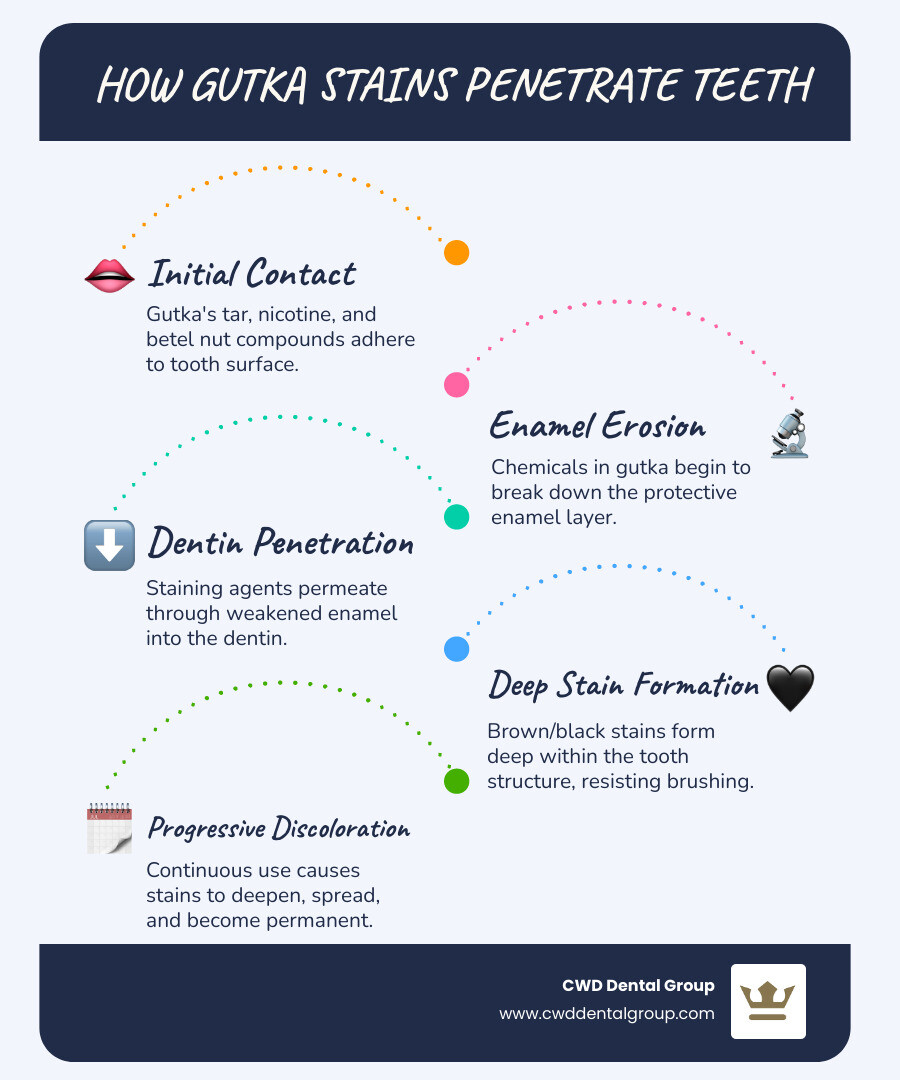
Gutka stains are notoriously stubborn. Unlike surface stains from coffee or tea, gutka contains tobacco, betel nut, tar, and nicotine that penetrate tooth enamel and stain the dentin layer underneath. This creates deep brown or black stains that regular brushing cannot remove.
The longer you use gutka, the deeper these stains become, making them progressively harder to eliminate. Dental professionals agree that it's nearly impossible to remove established gutka stains with toothpaste alone—a more strategic approach is required.
This guide covers home remedies for mild stains, explains when professional treatment is necessary, and shows you how to prevent stains from returning. We'll also discuss the serious health risks of gutka use, like gum disease and oral cancer, to highlight why quitting is the best long-term solution.
At-Home Gutka Stain Remover from Teeth: What Works and What to Avoid
While some home remedies can help with very mild, surface-level stains, gutka stains are different. The chemicals penetrate deep into your tooth structure, meaning what works on a coffee stain will likely have little effect on a gutka stain. If you're dealing with early or mild discoloration, these remedies might offer some improvement, but approach them with caution and realistic expectations.
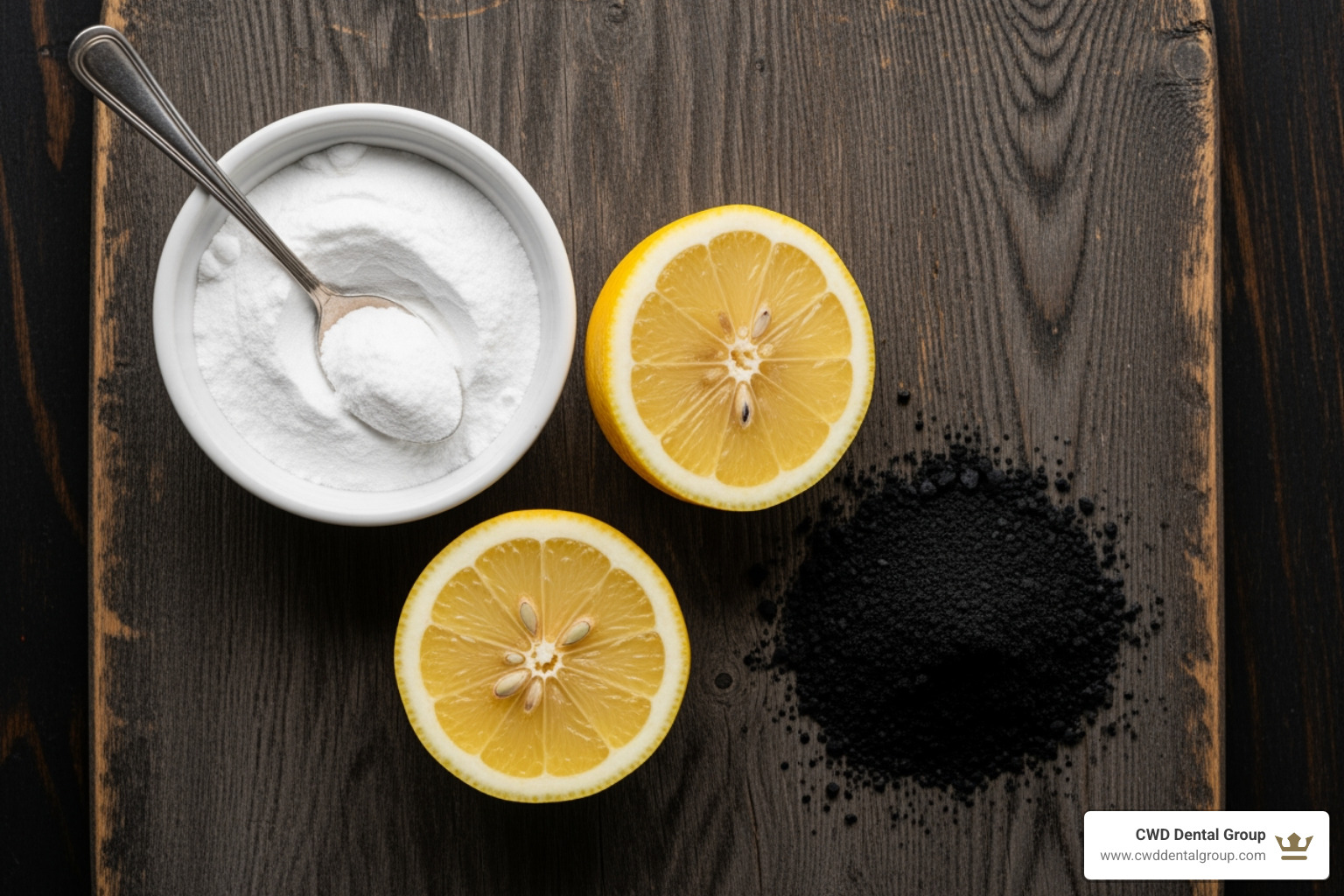
Baking soda and lemon juice: This popular DIY remedy uses baking soda as a gentle abrasive and lemon juice as a natural bleaching agent. Mix a few drops of lemon juice with baking soda to form a paste, brush gently for two minutes, and rinse. Use this only once a week, maximum. The acid in lemon juice can erode enamel over time, leading to sensitivity.
Activated charcoal powder: This porous powder binds to and lifts surface stains. Wet your toothbrush, dip it in the powder, brush gently for two minutes, and rinse thoroughly. Stick to twice a week at most. It is abrasive and can wear down enamel with overuse. Choose a fine-grain powder to minimize risk.
Hydrogen peroxide paste: This combines the bleaching power of hydrogen peroxide with the abrasiveness of baking soda. Mix them into a paste, brush for one to two minutes, and rinse. Use this sparingly—no more than once every week or two. High concentrations or frequent use can irritate gums and cause tooth sensitivity. Stop immediately if you feel discomfort.
Oil pulling with coconut oil: This ancient practice involves swishing a tablespoon of coconut oil in your mouth for 15-20 minutes before spitting it into the trash (not the sink). It's safe to do daily and can help reduce bacteria, but it is very slow-acting for deep stains. Consider it a long-term maintenance practice rather than a true gutka stain remover from teeth.
Whitening toothpastes contain mild abrasives or chemicals for surface stains. For the deep, intrinsic stains that gutka creates, they are largely ineffective. It is nearly impossible to remove established gutka stains with toothpaste alone.
| Home Remedy | Effectiveness for Gutka Stains (Mild) | Safety for Enamel | Time Commitment |
|---|---|---|---|
| Baking Soda & Lemon Juice | Moderate | Low (if used excessively) | 2 mins, 1x/week |
| Activated Charcoal Powder | Moderate | Medium (if used excessively) | 2 mins, 2x/week |
| Hydrogen Peroxide Paste | Moderate | Low (if used excessively) | 1-2 mins, sparingly |
| Oil Pulling (Coconut Oil) | Low | High | 15-20 mins, daily |
| Whitening Toothpastes | Low (surface stains only) | High (follow instructions) | Regular brushing, 2x/day |
Are At-Home Kits an Effective Gutka Stain Remover from Teeth?
Drugstore whitening products like pens, strips, and gels contain lower concentrations of bleaching agents than professional treatments. They work reasonably well for surface stains but often can't penetrate deep enough to make a significant difference on gutka stains. You might see a slight improvement, but a complete removal is unlikely.
Purple color corrector serums use color theory to neutralize yellow tones, creating a temporary optical illusion of whiter teeth. They do not remove any stains. A common side effect of many kits is increased tooth sensitivity, as the chemicals can irritate tooth nerves.
This is why a professional consultation is so important. At CWD Dental Group, we can assess the depth of your staining and advise whether an at-home kit is worth your time and money or if a professional treatment is necessary.
How Long Do Home Remedies Take to Work?
The timeline for results with home remedies varies greatly depending on your enamel, the duration of gutka use, and the depth of the stains. For very light, superficial stains, you might see subtle improvements after a few weeks of consistent use. However, for the deep brown or black stains from long-term gutka use, home remedies will likely show minimal to no improvement.
Consistency is key, but it does not mean overuse. Stick to the recommended frequencies to protect your enamel. It's crucial to manage expectations: home remedies are best for maintenance, not for removing established, deep gutka stains.
When should you see a dentist? If you've used a home remedy for several weeks with no noticeable change, or if you experience sensitivity, gum irritation, or bleeding, stop immediately and consult a professional. At that point, it's time to call CWD Dental Group. We have professional-grade treatments that can safely and effectively address the stubborn stains that home remedies can't.
When Home Remedies Fail: Professional Dental Treatments
If you've tried home remedies for weeks with little to show for it, you're not alone. Gutka stains are exceptionally tenacious because they penetrate deep into your tooth structure, far beyond where home treatments can reach. This is when professional dental care becomes necessary.
Limitations of Home Remedies and When to Consult a Dentist
Home remedies are designed for surface-level stains. Gutka creates intrinsic stains woven into the enamel and dentin layers. If you have deep brown or black discoloration that has been present for months or years, it's time to see a dentist. The sooner you consult a professional, the better the chances of successfully treating the stains. At CWD Dental Group, our Teeth Cleaning services are an excellent starting point for addressing gutka stains professionally.
Professional Scaling and Polishing
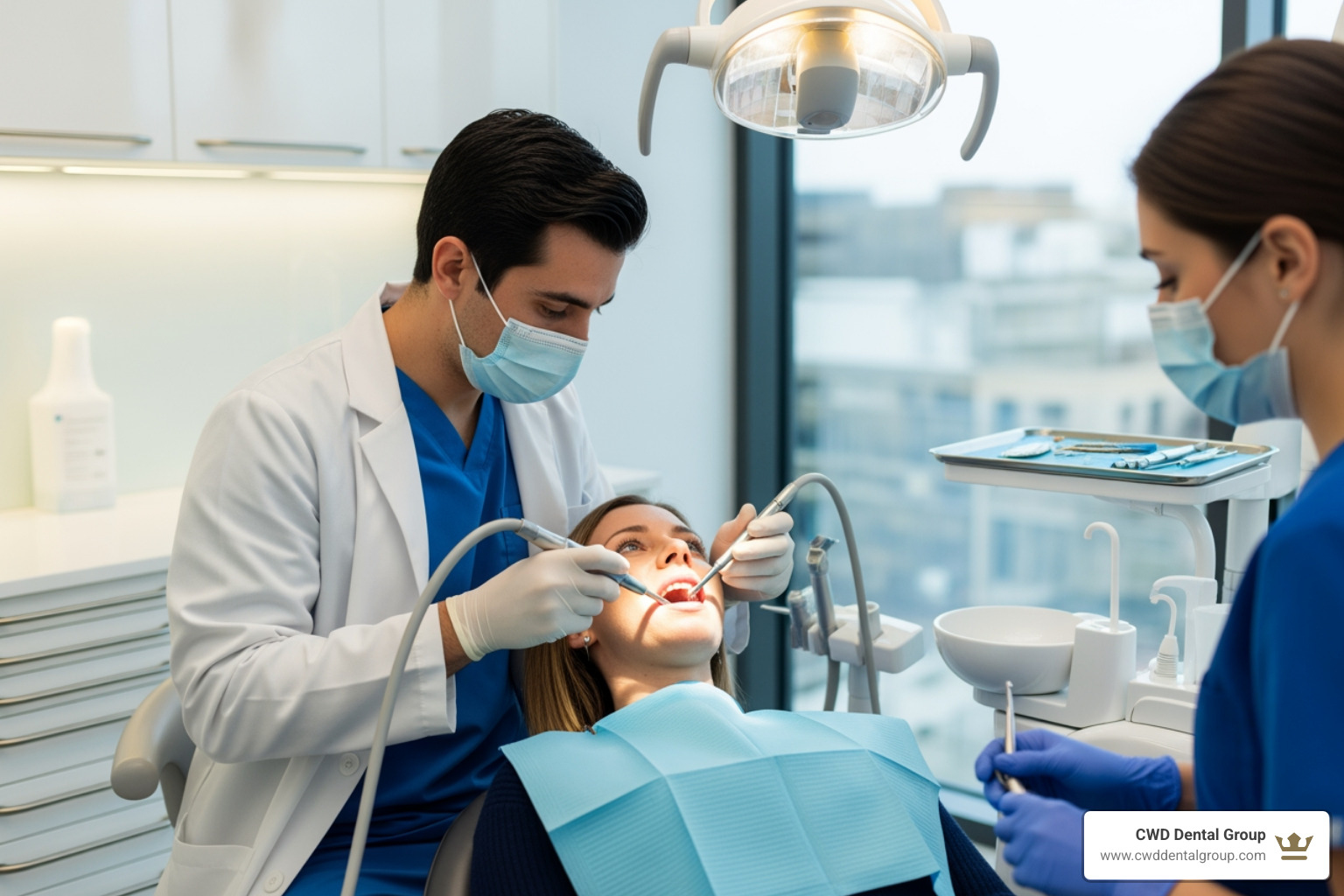
Professional scaling is a deep clean where a dental hygienist uses specialized instruments to remove hardened plaque (tartar) and gutka stains from tooth surfaces, including below the gum line. This is followed by polishing, which uses a special paste to smooth tooth surfaces and remove remaining stains. Polishing makes teeth look brighter and makes it harder for new stains to adhere. For many patients with external gutka stains, this procedure alone makes a remarkable difference.
Tartar Removal
Tartar removal is a key part of scaling. Gutka users often have significant tartar buildup because the residue accelerates the hardening of plaque. Once formed, tartar cannot be removed by brushing. Removing it is crucial for aesthetics and for preventing gum disease.
In-Office Teeth Whitening (Bleaching)
When scaling isn't enough for deeper stains, professional teeth whitening is the next step. We apply a high-concentration bleaching gel (hydrogen peroxide or carbamide peroxide) to your teeth, often activated by a special light to speed up the process. This allows the bleaching agents to penetrate deep into the tooth. The controlled office environment ensures safety and effectiveness. Many patients see their teeth lighten by several shades in a single visit, providing a level of gutka stain remover from teeth that over-the-counter products cannot match.
Dental Veneers for Severe Cases
For stains that are too severe or deeply embedded to be lightened, dental veneers are an excellent solution. Veneers are thin, custom-made porcelain shells bonded to the front of your teeth. They create a new, flawless facade, completely covering discoloration, chips, or other imperfections. While a more significant investment, veneers offer a permanent solution for a complete smile change.
Artificial Enamel Filling
If gutka use has eroded or damaged the tooth enamel itself, we may recommend artificial enamel filling. This restorative treatment uses a tooth-colored composite resin to rebuild damaged areas. While primarily addressing structural damage, it also improves the tooth's appearance by blending seamlessly with your natural tooth color.
Beyond the Stains: The Full Impact of Gutka on Your Oral Health
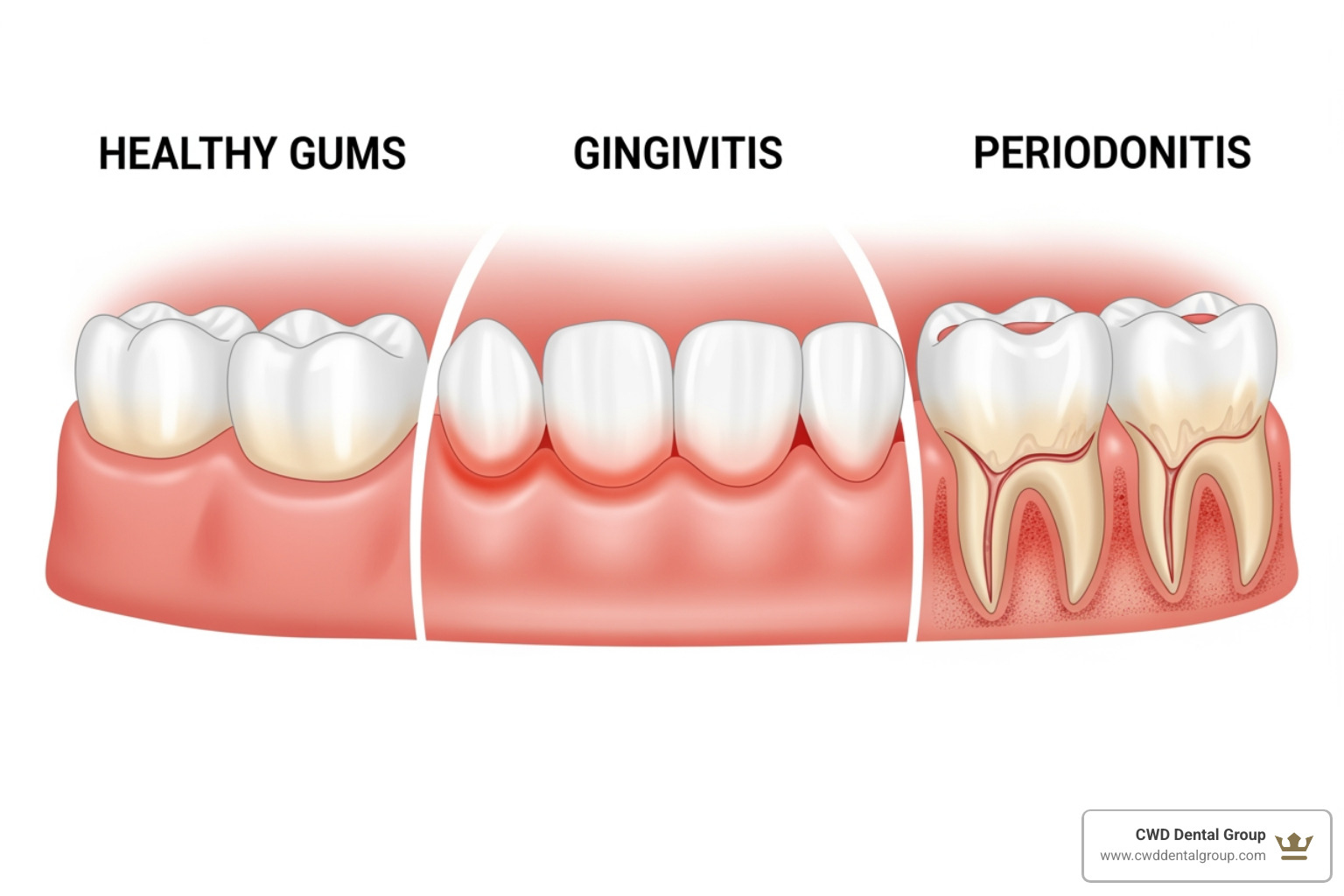
Gum Disease (Periodontal Disease)
The chemicals in gutka constantly irritate gum tissue, leading to gingivitis (red, swollen, bleeding gums). If untreated, this can progress to periodontitis, a serious infection that destroys the bone holding your teeth in place. Gums may pull away from the teeth, creating pockets for bacteria, which can eventually lead to tooth loss.
Increased Risk of Cavities and Tooth Decay
Gutka creates an acidic environment in your mouth, which erodes tooth enamel and fuels cavity-causing bacteria. Many gutka products also contain sugar, accelerating tooth decay at an alarming rate. It's not unusual for regular gutka users to develop multiple cavities.
Persistent Bad Breath (Halitosis)
Gutka causes chronic bad breath that brushing and mints cannot hide. The lingering odor is more than a social issue; it's a warning sign of bacterial overgrowth and gum inflammation, indicating more serious oral health problems.
Oral Submucous Fibrosis (OSF)
This serious condition, caused by chronic gutka use, involves the progressive stiffening and tightening of oral tissues like the cheeks and tongue. This can make it difficult to open your mouth, eat, speak, and maintain oral hygiene. Most concerning, OSF is a precancerous condition, a major red flag that something is seriously wrong.
Risk of Oral Cancer
Gutka use significantly increases your risk of developing oral cancer. The World Health Organization classifies betel quid, a main ingredient in gutka, as a Group 1 carcinogen, meaning it definitively causes cancer. Adding tobacco to the mix multiplies this risk. Oral cancer can be aggressive and life-threatening. Early detection is critical, which is why regular dental check-ups are essential for anyone with a history of gutka use.
For more comprehensive information, the CDC provides detailed resources on the health effects of smokeless tobacco.
At CWD Dental Group, we understand these risks are overwhelming. Knowledge is the first step toward making healthier choices. Our team is here to support you without judgment.
Prevention: Keeping Your Smile Bright and Healthy
We've explored remedies and health consequences, but the ultimate solution is prevention. An ounce of prevention is worth a pound of cure and far less time in the dental chair.
Quitting Gutka as the Ultimate Solution
Quitting gutka completely is the single most effective way to prevent stains and safeguard your health. No treatment can undo the continuous damage if the habit persists. Quitting stops new stains, allows oral tissues to heal, and dramatically reduces your risk of severe diseases like oral cancer.
Benefits of Quitting for Dental Health
When you quit gutka, your mouth immediately begins to recover. New stain formation stops, gums can heal from chronic irritation, and your risk of cavities decreases as your mouth's pH balance normalizes. Your breath will become fresher, and most importantly, you significantly lower your lifetime risk of developing oral cancer.
Maintaining Excellent Oral Hygiene
After quitting, a strong oral hygiene routine is your best defense.
- Proper Brushing: Brush twice a day for two minutes with a fluoride toothpaste and a soft-bristled brush. Use gentle, circular motions at a 45-degree angle to your gums.
- Daily Flossing: Flossing is non-negotiable for removing plaque and food from between teeth and under the gum line. Water flossers are a great alternative.
- Antiseptic Mouthwash: Use an antiseptic mouthwash after brushing and flossing to kill bacteria that cause plaque and bad breath. It's a supplement, not a substitute, for brushing and flossing.
- Rinsing with Water: Vigorously rinsing your mouth with water after meals helps wash away food debris and acids before they can cause stains.
Regular Dental Check-ups
Visit your dentist every six months for a professional cleaning and check-up. These visits allow us to remove any new plaque or stains, monitor your oral health, and screen for signs of disease, which is especially important if you have a history of gutka use. Our team at CWD Dental Group offers a full range of Our Services to help you prevent problems before they start.
How to Prevent Stains After Using a Gutka Stain Remover from Teeth
Once you've successfully removed gutka stains, maintaining your bright smile is key. Be mindful of staining foods and drinks like coffee, tea, and red wine, and rinse with water after consuming them. Staying hydrated and maintaining your consistent oral hygiene routine are your best defenses. Finally, regular professional cleanings every six months will keep your teeth pristine and catch any new issues early.
Conclusion: Reclaim Your Smile from Gutka Stains
Dealing with gutka stains can feel overwhelming, but a brighter, healthier smile is absolutely achievable. We've seen that while home remedies offer limited help for the deep, intrinsic stains caused by gutka, professional dental treatments provide effective and lasting solutions.
Options like scaling, polishing, and in-office teeth whitening can dramatically improve your smile's appearance. For the most severe cases, dental veneers offer a complete change. However, the most important message is this: quitting gutka is the best long-term solution for your smile and your overall health. It stops the cycle of staining and damage, and lowers your risk for serious conditions like gum disease and oral cancer.
We know this journey isn't easy, but you don't have to do it alone. At CWD Dental Group, we have helped countless patients in Tallahassee, Havana, Quincy, Crawfordville, and Wakulla restore their smiles and confidence. We partner with you to create a personalized plan to remove stains, treat damage, and support your oral health goals.
Your smile is worth fighting for. For residents in Tallahassee seeking professional guidance, we're here to help you take the first step. Schedule Your Teeth Cleaning Today and let our experienced team show you what's possible. You deserve a smile that makes you proud, and we'd be honored to help you reclaim it.